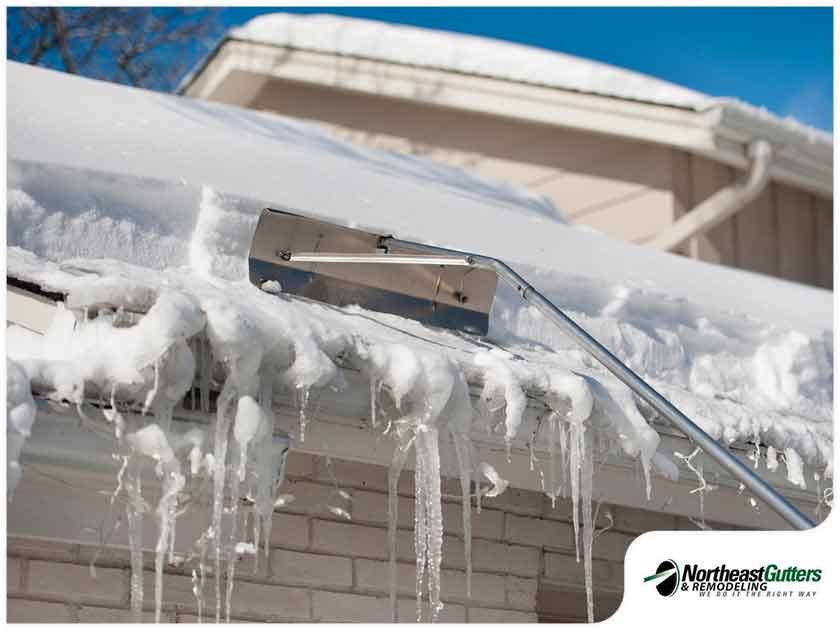
Roof snow removal matters because heavy snow adds load to the structure, feeds ice dams and can pull gutters off the fascia, so clearing it safely and on time protects several parts of the house at once.
Northeast Gutters & Remodeling works on roofs and gutters for homeowners in Hartford County, Connecticut, and this guide explains the risks and how to plan the work without putting anyone on a slippery roof.
The Load on the Structure
Snow weighs more than most homeowners expect, and a deep wet layer adds stress to rafters and connections. The Connecticut Insurance Department warns that heavy snow and ice can cause roof collapses.
A 2015 state release asked residents to clear roofs as a safety precaution to prevent potential collapses. Sagging ceilings, cracking sounds or doors that suddenly stick are signs to call a professional rather than wait for the next storm. For how to estimate the weight, see is it time to remove snow on your roof.
The Link to Ice Dams
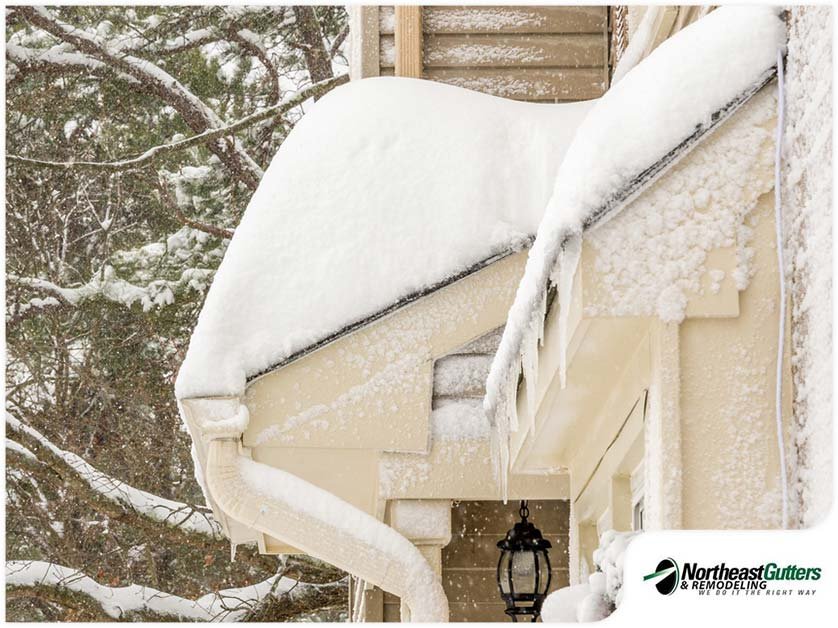
The state advisory describes an ice dam as heavy snow that melts and then refreezes, and it ties the problem to inadequate attic insulation. The melt forms at the warm part of the roof and refreezes at the cold eaves, where it can force water under shingles.
Clearing the lower edge of snow can interrupt that cycle for a while, but the cause is heat escaping from the house. Our page on ice dam removal explains the warning signs and the options.
Gutters and Fascia Take the Hit
Snow sliding off a roof can bend a gutter or pull it from the fascia. Ice that builds in the trough adds more weight, so a system that was sound before the storm can separate during it.
After each big snow, look for gaps between the trough and the fascia and for sections that sag. A gutter repair is simpler when it is caught early.
Where sliding snow is a repeat problem, snow guards and snow fences can slow it down.
Why Roof Work Is Dangerous
OSHA’s hazard alert on rooftop snow removal says that falls cause the most worker fatalities and injuries during the job. It also warns that roof collapse can injure or kill workers, and that power lines and other conductors should be treated as energized.
The alert advises using snow rakes or drag lines from the ground and requiring fall protection for work on the roof. That is a good reason to hire a professional instead of climbing up with a shovel. Our guide on whether to remove snow and ice yourself covers the safer options.
Timing the Removal
Removing snow soon after a storm is easier than waiting for it to compact and freeze. Compacted snow and ice are harder to clear and more likely to tear shingles when they come off.
Plan the work for a safe window, and avoid active storms and icy surfaces. If the roof is steep, the snow is deep or power lines run near the eaves, leave it to a crew with the right equipment.
Document Damage for Your Insurer
Photograph the snow load, the ice and any visible damage before the roof or gutters are cleared. The state advisory tells homeowners to report damage to the insurer as soon as possible, and to wait on permanent repairs until the insurer has inspected.
Keep a written log of storm dates, removal dates and contractor visits. Our guide on homeowners insurance and damaged gutters explains how coverage works for gutter damage.
What a Good Removal Plan Includes
| Item | Why it matters | What to ask for |
|---|---|---|
| Safety plan | Falls and power lines are the main hazards | Fall protection and ground based tools where possible |
| Roof protection | Shingles can tear if ice is chipped off | How the crew avoids damaging the roofing |
| Gutter check | Snow and ice load can loosen hangers | A walk around the gutters after the work |
| Insurance and license | Protects you if something goes wrong | Proof of insurance and a registration number |
| Written scope | Prevents disputes over what was cleared | Areas covered, the date and the price in writing |
When our crew reviews a roof after a heavy snow, we look at the eaves, the gutters, the fascia and the flashing for signs of strain. We write those findings into a scope, so the next steps are clear.
Where storm damage turns up, our storm damage roof repairs page explains how we handle it.
Roof Snow Removal Questions From Hartford County Homeowners
How do I know if there is too much snow on my roof?
There is no single rule, so watch for warning signs inside the house. Sagging ceilings, cracking sounds or doors and windows that suddenly stick are reasons to call a professional, and the state urges clearing heavy buildup before more snow arrives.
Can I remove roof snow myself?
It is risky. OSHA says falls cause the most injuries and deaths during rooftop snow removal and advises snow rakes or drag lines from the ground, so hire a professional if the roof is steep, icy or near power lines.
Will removing snow stop ice dams?
It can help for a while, because clearing the lower edge removes the snow that melts and refreezes. The state advisory ties ice dams to inadequate attic insulation, so the lasting fix is addressing the heat loss, not only the snow.
Can snow damage my gutters?
Yes. Snow sliding off the roof can bend a section or pull it from the fascia, and ice in the trough adds weight, so check the gutters after each big storm for gaps at the fascia and sagging runs.
What should I document before snow is cleared?
Take dated photos of the snow load, the ice and any damage, and keep a log of storm dates and contractor visits. The state tells homeowners to report damage promptly and wait for an inspection before permanent repairs.
How soon after a storm should snow be removed?
Sooner is easier, because snow that compacts and freezes is harder to clear and more likely to tear shingles. Choose a safe window with no active storm and no icy surfaces, and leave steep or high roofs to a trained crew.
Get a Roof and Gutter Check After Heavy Snow
If heavy snow has stressed your roof or gutters, call 860-899-7878 or request a free estimate and we will inspect the roofline and explain what we find.
About the Author
Thiago Barboza Batista is the owner of Northeast Gutters & Remodeling, a family-owned contractor in Bloomfield, Connecticut, founded as a gutter company in 2004. He oversees seamless gutter, copper gutter, roofing and siding projects for homeowners across Connecticut, from the free on-site estimate to the final inspection.
Sources
- Connecticut Insurance Department, consumer advisory (December 2024): heavy snow, roof collapses, ice dams and reporting damage.
- State of Connecticut, 2015 release on clearing snow from roofs: clearing roofs to prevent potential collapses.
- OSHA, Falls and Other Hazards to Workers Removing Snow from Rooftops: fall, power line and collapse hazards and ground based tools.