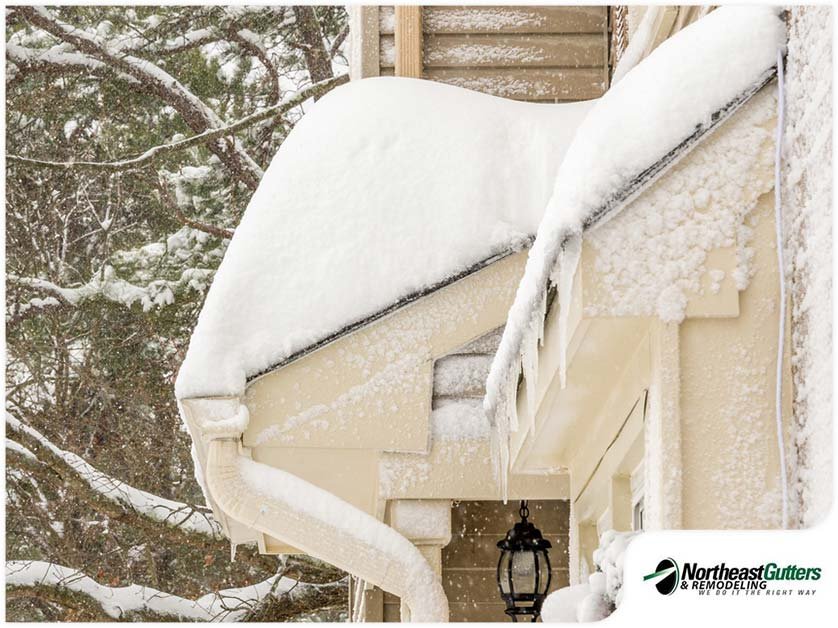
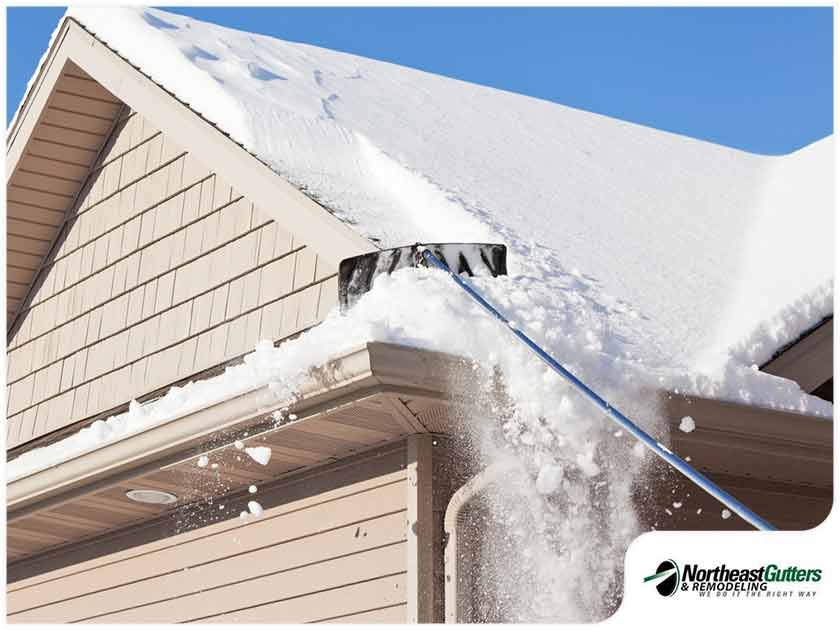
Removing snow from the roof can reduce weight and ice buildup, but the job carries real risk. For most Connecticut homeowners, the safer answer is to clear the snow from the edges and call a professional for anything that requires a ladder or roof access.
Northeast Gutters & Remodeling is based in Bloomfield, CT, and provides rooftop snow removal and steamed ice removal throughout the Hartford region. This guide explains the choices and the safety limits.
When Snow Removal Helps
Heavy snow adds weight to the roof, and a Connecticut consumer alert warns that heavy snow and ice can cause roof collapses (CT Insurance Department alert). Removing part of the load can reduce that stress, especially after a large storm on an older roof.
In its ice dam explainer, Green Building Advisor describes warmth leaking up from the house, snow melting on the roof, and water refreezing at the cold eave (Green Building Advisor). Clearing the lower edge can slow that cycle. For the load and ice dam risks, see why roof snow removal matters.
When to Stay Off the Roof
Stay off a snowy or icy roof. Falls from roof edges cause serious injuries, and a slip on ice can happen quickly even on a low pitch.
Keep the ladder base firmly placed and avoid working alone on a ladder in winter. If the snow is deep or the pitch is steep, call our rooftop snow removal team instead.
Safer Ways to Clear the Edge
A roof rake with a long handle lets you pull snow off the lower few feet from the ground. Work from the bottom up and avoid standing directly under the eave while you pull.
Avoid chipping at ice with a metal tool, because it can crack shingles and gutters. Gentle, controlled removal is safer for the roof than forcing the ice loose.
Ice Is the Bigger Concern
The same alert notes that ice dams can form when snow melts and refreezes, often because attic insulation is inadequate, and that they can cause interior water damage (the alert).
Our steamed ice removal and ice dam removal services handle ice that has already formed. Our blog on common causes of gutter damage shows what ice can do to the roof edge.
Keep the Drains Open
The alert advises clearing gutters and drains, and removing snow and ice from gutters and downspouts when it is safe, so meltwater can drain away. It also suggests sealing and insulating attic vents to keep warm air inside.
If the gutters begin to sag or pull away, call early. A sagging run means the edge is carrying more weight than it should.
| Winter sign | What to do | When to call |
|---|---|---|
| Heavy snow on an older roof | Pull snow from the lower edge with a roof rake | If the snow is deep or the pitch is steep |
| Ice along the eaves | Keep off the roof and avoid chipping | As soon as you see it forming |
| Icicles on gutters | Leave them in place | If the gutters begin to sag |
| Water inside after a thaw | Photograph it and place a container below | Right away, to limit damage |
Winter Roof Safety Checklist
- Stay off a snowy or icy roof.
- Pull snow from the lower edge with a roof rake.
- Leave icicles in place and call if gutters sag.
- Clear drains and downspouts when it is safe.
- Photograph damage and contact your insurer quickly.
- Plan attic insulation and air sealing for next winter.
A Crew That Handles Winter Risk
Our crew removes snow and ice with the right equipment and a safety plan, so you stay on the ground. We also look at the attic and the eaves to find what keeps feeding the ice.
Roof Snow and Ice FAQs
Should I remove snow from my roof?
Removing snow can reduce weight and ice buildup, especially after a large storm on an older roof. For most homeowners, the safer choice is to clear the lower edge from the ground and call a professional for roof access.
Is it safe to climb onto a snowy roof?
No, falls from roof edges cause serious injuries, and a slip on ice can happen quickly even on a low pitch. If the snow is deep or the pitch is steep, call a professional instead of climbing up.
How do I clear snow from the edge safely?
Use a long handled roof rake to pull snow off the lower few feet, working from the bottom up. Avoid standing under the eave, and avoid chipping ice with a metal tool, which can crack shingles and gutters.
What causes ice dams?
Warmth leaking up from the house melts snow on the roof, and the water refreezes at the cold eave, according to Green Building Advisor. Air leaks at the ceiling and too little attic insulation are named in the article as the two biggest culprits.
What does Connecticut advise after storm damage?
The Connecticut alert advises you to contact your insurer quickly, photograph the damage, and prevent further harm. It says to wait for an inspection before making permanent repairs, and our team can document the roof and gutters during a visit.
When should I call a professional for snow and ice?
Call when the snow is deep, the pitch is steep, ice is building along the eaves, or gutters begin to sag. Our team can remove snow and ice safely with the right equipment while you stay on the ground.
Need Snow or Ice Cleared Safely?
Northeast Gutters & Remodeling can remove roof snow and ice, check the eaves, and explain what is feeding the buildup.
Reach us through our free estimate page or call 860-899-7878 to book snow or ice removal.
About the Author
Thiago Barboza Batista is the owner of Northeast Gutters & Remodeling, a family-owned contractor in Bloomfield, Connecticut, founded as a gutter company in 2004. He oversees seamless gutter, copper gutter, roofing and siding projects for homeowners across Connecticut, from the free on-site estimate to the final inspection.
Sources
- Connecticut Insurance Department: Consumer Alert on Winter Storms: Roof collapse, ice dams, drains, and storm damage steps.
- Green Building Advisor: Ice Dams, Causes and Fixes: How ice dams form and what drives them.