Homeowners insurance usually covers damaged gutters when a covered event, such as a windstorm or a falling tree, causes the damage. It rarely covers gutters that failed from age, rust or years without maintenance.
Northeast Gutters & Remodeling helps West Hartford, Connecticut homeowners tell the two apart, and because your own policy wording settles every case, this guide shows what to check before you call your insurer.
What Most Homeowners Policies Treat as Covered
Gutters are part of the dwelling, so they sit under the same protection as the roof and siding. When a covered peril damages them, the repair or replacement is usually handled as part of the claim.
Typical examples include:
- Wind that bends gutters, loosens them or pulls them away from the fascia
- A tree or large limb that lands on the gutters during a storm
- Hail or another covered impact that dents or splits sections
- A covered roof or siding repair that requires the gutters to come off
Whether a specific item is covered depends on the policy form and its exclusions, so treat this list as a starting point and not a promise. When the damage comes from a storm, the repair path is usually an insurance gutter replacement handled together with the claim.
Connecticut Details That Affect Your Claim
The Connecticut Insurance Department explains that a homeowners policy covers windstorm damage even when the cause is an act of God, whether the storm is a hurricane, a tornado or a cyclone. On an all perils policy, anything not specifically excluded is covered, while a policy that names its perils covers only the ones listed.
Deductibles deserve a second look. Some policies carry a separate wind deductible, written as a flat dollar amount or a percentage of the dwelling limit.
A hurricane deductible follows stricter rules in Connecticut. Under state standards described by the Insurance Department, it can only apply when the National Hurricane Center has issued a hurricane warning for part of the state and the hurricane produces maximum sustained winds of 74 miles per hour or more somewhere in Connecticut.
When it applies, it runs from that warning until 24 hours after the last warning ends or the storm is downgraded, and the percentage and dollar amount appear on your declarations page. A small gutter repair can cost less than the deductible, which is worth knowing before you open a claim.
Trees follow their own rules. When a tree falls on a covered structure because of a covered peril, the damage to the house is covered, and removal is generally covered up to $500 when the tree damages a covered structure or blocks a driveway, as the Connecticut Insurance Department describes.
A tree that falls without hitting anything is generally not covered.
Common Gutter Situations and How Claims Often Go
| Situation | How insurers often treat it | What to check |
|---|---|---|
| Wind peels a gutter run off the house | Often covered as storm damage | Your wind deductible and the date of the storm |
| A fallen limb crushes gutters and fascia | Often covered when a covered peril caused the fall | Tree removal limits and photos of the limb |
| Gutters rust through or sag with age | Typically treated as wear and tear | Exclusions for deterioration and maintenance |
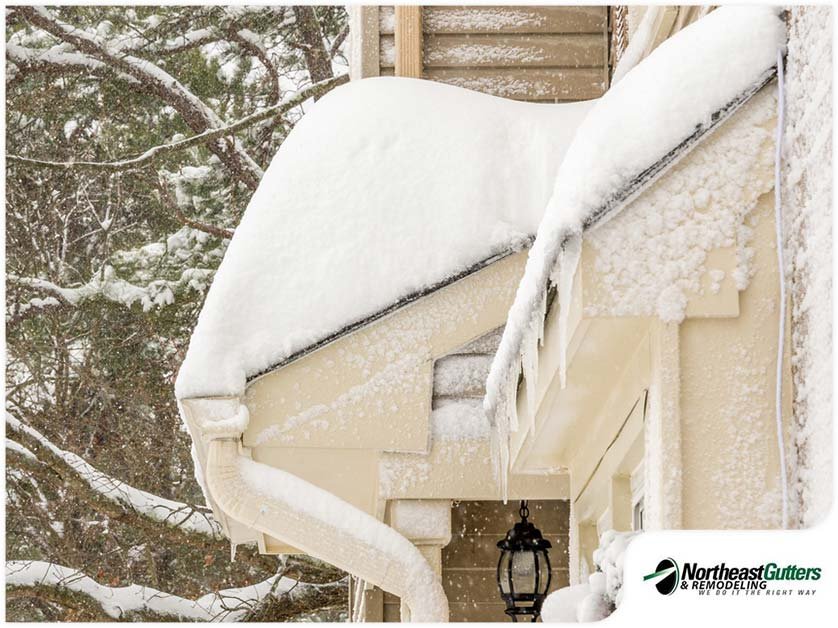
| Heavy ice tears gutters off the fascia | Often covered when weight of ice is a listed peril | Your policy’s covered causes of loss |
| Clogged gutters overflow and stain siding | Typically a maintenance issue | Whether resulting water damage is excluded |
| Floodwater reaches the foundation | Excluded from standard policies | Separate flood coverage, which has a 30 day waiting period |
What Gutter Repair Costs, and When a Claim Is Worth It
Coverage is only half of the decision. The other half is the size of the repair compared with your deductible.
The cost of a gutter repair depends on the material, the length of the damaged run, the height and pitch of the roofline and whether the fascia behind it is rotted. A short damaged section costs far less than a full house, and copper or two story work costs more.
A written local estimate for gutter installation in West Hartford is what settles your number.
Then compare that estimate with the deductible on your declarations page:
- Say the written estimate is $1,800 and your deductible is $1,000. On a covered claim, the starting payment is $800, before any depreciation adjustment.
- With a percentage deductible, the gap grows fast. The Connecticut Insurance Department claims guide works this example: a home insured for $250,000 with a 2 percent deductible leaves $5,000 with the homeowner.
When the repair sits below the deductible, there is nothing for the policy to pay, and some homeowners choose to cover it out of pocket. Ask your agent how your insurer records a reported loss that ends without a payment, since practices vary.
When the damage runs into the fascia, the roof edge or the siding, the total often passes the deductible, and the claim becomes worth a call.
Replacement Cost or Actual Cash Value: Why It Changes the Check
Two policies can cover the same storm and pay very different amounts, because they value the gutters differently.
- Replacement cost pays to repair or replace with materials of similar kind and quality, without deducting for depreciation.
- Actual cash value starts from that replacement cost and subtracts depreciation for age and condition.
The National Association of Insurance Commissioners explains this difference and why it matters most on older systems. On a gutter run that is 15 or 20 years old, depreciation can take a large share of the payment.
Many replacement cost policies also pay in two steps: first the actual cash value, then the withheld depreciation after the work is done and the final invoice is submitted. Ask your agent which basis your policy uses before you schedule the repair, so the first check does not surprise you.
First Steps After Gutter Damage
- Photograph the damage from the ground and keep any broken pieces.
- Add temporary protection so water does not make things worse, and save the receipts.
- Read your declarations page to see which deductibles apply.
- Contact your insurer or agent and ask how to start a claim.
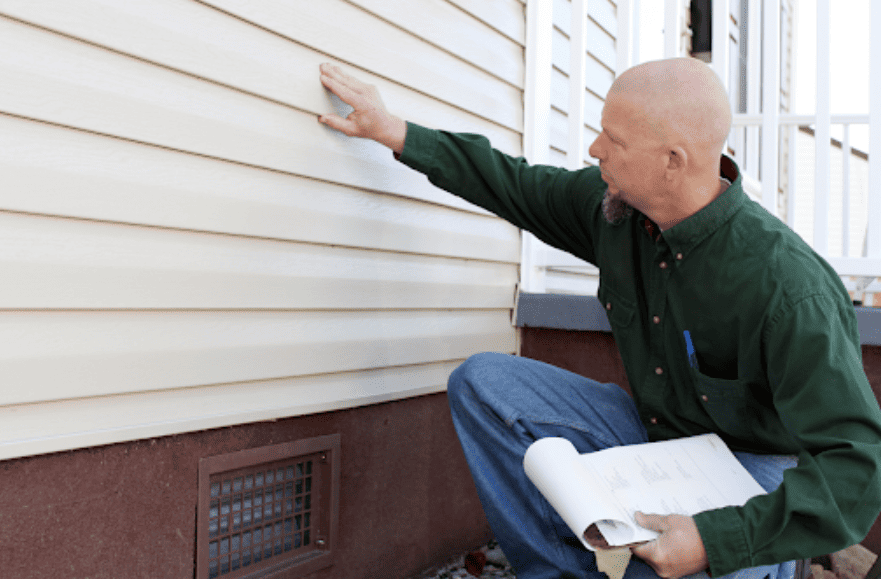
- Schedule an inspection so the scope of the repair is written down before work begins.
Report the damage as soon as you reasonably can. Policies set conditions for how and when a loss must be reported, and a clear storm date makes the claim easier to document.
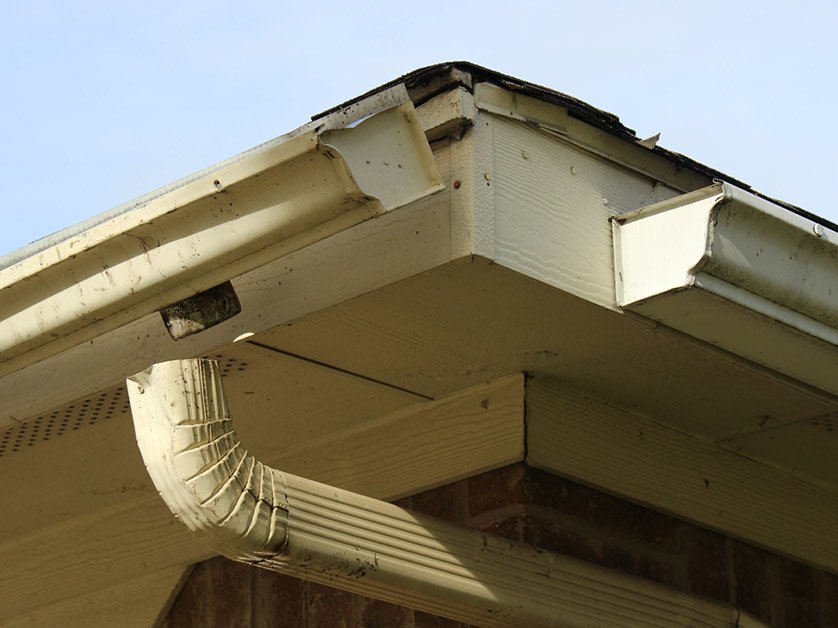
When our team inspects storm damage, we check more than the bent section. We look at the fascia behind it, the pitch of the run, the hangers and fasteners, and whether the existing profile can still be matched.
That scope is what the adjuster needs, and it is the same scope behind our storm damage gutter replacement work. Our guides on documenting gutter damage and filing the claim step by step cover the next steps.
When Gutter Damage Is Not an Insurance Matter
Many gutter problems come from slow causes. Seams that leak, fasteners that back out and sections that sag usually develop over years, and a gutter repair is often all they need.
Fixing them early keeps a small issue from turning into fascia or foundation damage.
Flood damage sits in a separate category. Standard homeowners policies exclude it, and flood coverage is bought separately through the National Flood Insurance Program or a private insurer.
According to FloodSmart, the FEMA site for the program, a new flood policy takes 30 days to go into effect, so buying one after a storm is forecast is already too late for that storm.
Questions West Hartford Homeowners Ask
Will my insurer pay for all new gutters if only one section is damaged?
That depends on the policy and the adjuster’s findings. Some claims pay for the damaged section, while others include a full run when matching material is hard to find.
Ask your insurer how it handles matching before the repair is scheduled.
Does insurance cover gutters damaged by ice and snow?
Many standard homeowners policies list the weight of ice, snow or sleet as a covered cause of loss, so gutters torn down by heavy ice can be covered. Damage from ice dams is less predictable: the water that backs up under shingles may be covered, while the ice dam itself and gutters worn out by repeated freezing are usually treated as maintenance.
Check the covered causes of loss in your policy or ask your agent before assuming either way. If ice is building up now, ice dam removal before the next thaw limits the damage.
Should I repair the gutters before the adjuster visits?
Protect the house from further water damage first, but keep photos, broken parts and receipts. Permanent repairs are usually best done after your insurer has seen the damage or approved the scope of work.
What should I have ready when I file a gutter claim?
Gather photos of the damage, the date of the storm, your declarations page with its deductibles, receipts for any temporary protection and a written repair estimate if you have one.
How soon should I report gutter damage to my insurer?
As soon as you reasonably can after the storm. Your policy sets the reporting conditions, and late reporting can complicate a claim.
Photos taken on the day of the damage, with the storm date noted, make the timeline easy to prove.
How do I get my gutters inspected after storm damage in West Hartford?
Call Northeast Gutters & Remodeling at 860-899-7878 and describe what you see. The team will inspect the damage, explain what failed and outline the repair so you have clear details for your insurer.
Get Clear Answers Before You File
Damaged gutters are easier to handle once you know what failed and why. Phone 860-899-7878 or request an estimate, and Northeast Gutters & Remodeling will look over the roofline with you and explain what comes next.
About the Author
Thiago Barboza Batista is the owner of Northeast Gutters & Remodeling, a family-owned contractor in Bloomfield, Connecticut, founded as a gutter company in 2004. He oversees seamless gutter, copper gutter, roofing and siding projects for homeowners across Connecticut, from the free on-site estimate to the final inspection.
Sources
- Connecticut Insurance Department, Homeowners Storm Claims: windstorm coverage, hurricane deductible standards, tree removal and flood exclusions.
- Connecticut Insurance Department, Post-Disaster Claims Guide: how flat and percentage deductibles change a claim payment.
- National Association of Insurance Commissioners, Replacement Cost and Actual Cash Value: how depreciation changes what a claim pays.
- FloodSmart, FEMA: a new flood policy takes 30 days to go into effect.