A homeowner can safely handle the checks that happen from the ground or the attic, and sometimes a single shingle within easy reach. Anything that means walking the roof, touching flashing or chasing a leak that keeps coming back belongs to a professional crew.
Northeast Gutters & Remodeling, a Bloomfield, CT contractor, handles roof repairs across the Hartford area each season. This guide sorts common roof repairs into what you can do yourself and when to stop and call for help.
The Fall Risk Comes First
Ladders and roof edges are where the biggest risks sit. Ohio State University safety guidance advises setting the ladder base 1 foot out for each 4 feet of height, keeping three points of contact, and extending an extension ladder 3 feet past the surface you step onto (Ohio State EHS).
It also says to set ladders on solid, stable ground and stay within the weight limit. If the job requires walking the roof, call a professional instead. Our guide on the risks of DIY roof repair covers the safety side in detail.
Hidden Damage Sits Under the Surface
A patch over one shingle can hide soft decking, lifted underlayment, or damaged flashing around the same spot. The repair looks finished, but the water path remains.
ARMA states that a deck with warped, rotted, or unsound support should be fixed before new shingles go on (the association’s FAQ). That is why surface patches rarely solve a deeper problem.
Which Repairs a Homeowner Can Handle
Some small tasks are fine from the ground, while others hide larger problems. The table shows where a homeowner’s limit usually sits.
When a repair needs roof access or touches flashing, our roof repairs and upgrades team can take over. For leaks after a storm, see our storm damage roof repairs page.
| Repair | Homeowner limit | When to call a pro |
|---|---|---|
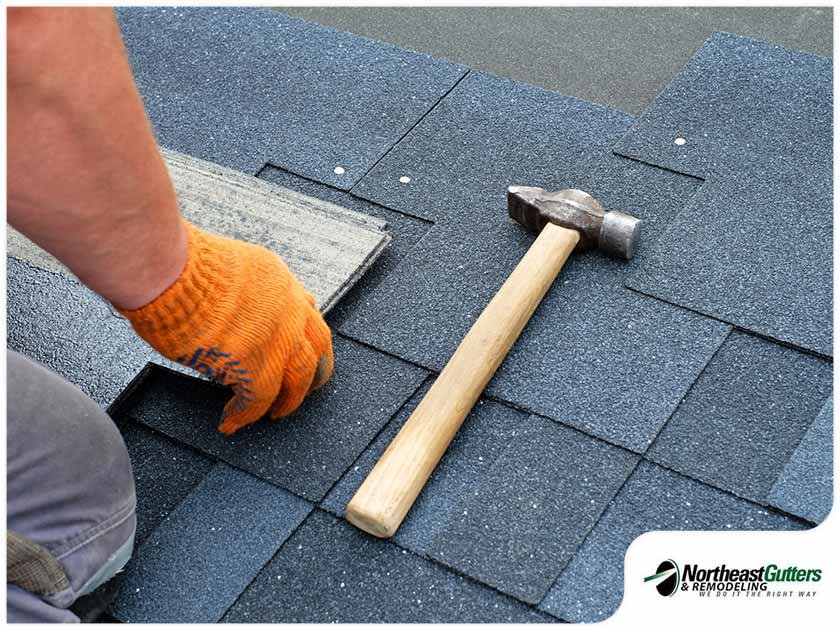
| Replacing one or two shingles | Fine from the ground if you can reach safely | The surrounding shingles are brittle |
| Sealing a visible crack | Usually a short term fix | The crack returns or spreads |
| Clearing debris from a valley | Only from a stable ladder or the ground | Debris hides damage or standing water |
| Patching flashing | Not a good fit for DIY | Flashing is lifted, bent, or leaking |
Why Leaks Come Back
Water can travel along framing before it shows as an interior stain, so the visible spot may sit far from the entry point. A patch placed over the stain misses the cause.
A professional traces the path, repairs the cause, and checks the attic for damp insulation. Our attic structural services page covers deck and framing repairs after moisture damage. If a leak appears before a crew can visit, see temporary roof fixes until a pro arrives.
What You Can Safely Check
- Look at the roof from the ground with binoculars.
- Check the attic for stains and damp insulation.
- Walk the yard for shingle pieces after storms.
- Note loose or missing shingles from the ground.
- Photograph damage for your records.
- Call a pro before stepping onto the roof.
A Crew That Handles the Climb
Our crew brings the equipment and training to repair the cause and not just the symptom. If patches keep failing, our guide to roof replacement costs helps you weigh repair against replacement.
Questions About Roof Repairs You Can Do Yourself
Is it safe to fix my own roof?
Ladders and roof edges carry real fall risk, and Ohio State safety guidance stresses three points of contact and a base set 1 foot out per 4 feet of height. If the job means walking the roof, call a professional.
Can a surface patch fix a leak?
Often not, because a patch over one shingle can hide soft decking, lifted underlayment, or damaged flashing nearby. The repair looks finished while the water path remains, so the leak can return after the next heavy rain or thaw.
Can I replace a shingle myself?
Replacing one or two shingles can be reasonable if you can reach the spot safely from the ground. If the nearby shingles are brittle or the area is steep, a professional should handle the repair to avoid damaging more roofing.
Why does a leak show up far from the damage?
Water can travel along framing and decking before it appears as a stain, so the visible spot may sit far from the entry point. A professional traces the path and repairs the cause of the leak instead of the symptom.
What does ARMA say about damaged decking?
The Asphalt Roofing Manufacturers Association states that a roof deck with warped, rotted, or unsound support should be repaired or replaced before new shingles go on. That is why a surface patch rarely solves a deeper problem on its own.
When should I call a professional?
Call when the repair needs roof access, touches flashing, or the leak returns after a patch. Our team can inspect the roof and attic, explain the cause, and complete the repair safely without you climbing onto the roof yourself.
Have a Roof Repair You Are Unsure About?
Northeast Gutters & Remodeling can inspect the roof, find the cause, and complete the repair so you can stay on the ground.
Reach us through our free estimate page or call 860-899-7878 to request a roof repair visit.
About the Author
Thiago Barboza Batista is the owner of Northeast Gutters & Remodeling, a family-owned contractor in Bloomfield, Connecticut, founded as a gutter company in 2004. He oversees seamless gutter, copper gutter, roofing and siding projects for homeowners across Connecticut, from the free on-site estimate to the final inspection.
Sources
- Ohio State University EHS: Ladder Safety: Ladder angle, footing, and points of contact.
- Asphalt Roofing Manufacturers Association: Frequently Asked Questions: Deck condition before new shingles.