Roof vents keep the attic close to outdoor temperature and humidity. Each type has a job, and the system works best when intake and exhaust are balanced.
Northeast Gutters & Remodeling installs and repairs roof ventilation for homeowners across Connecticut from our base in Bloomfield, and the guide below explains the main vent types and how they fit together.
Why Ventilation Matters
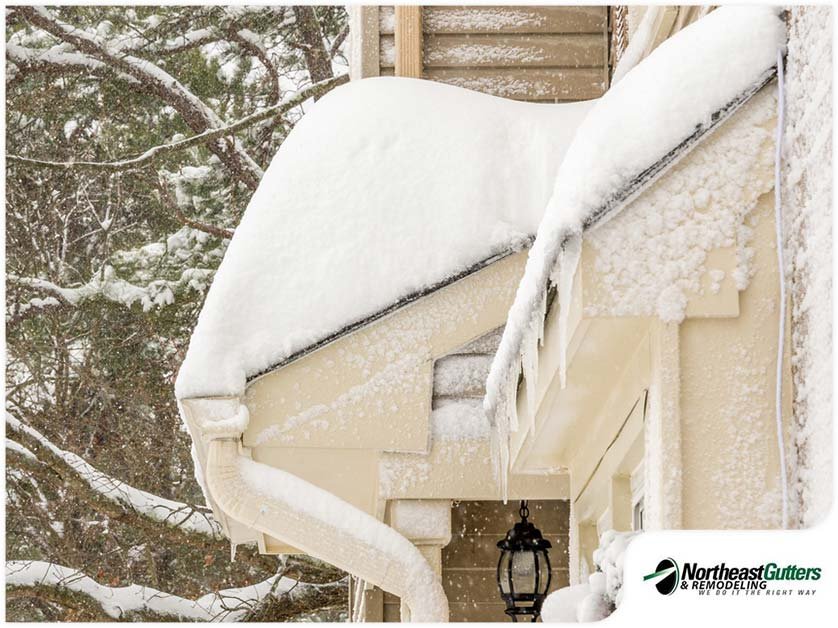
This Old House says good airflow keeps the attic at a steady temperature, prevents moisture buildup, and can extend the life of the roof. Its attic ventilation guide lists ice dams, frost on the sheathing, and attic mold as signs of poor ventilation. For how the whole system works, see our guide to roof ventilation.
Intake Vents
Soffit vents sit under the roof overhang and let cooler air in at the lowest point. Family Handyman calls them the best intake option and warns that debris, cobwebs, or insulation often block them.
Exhaust Vents
| Vent type | Where it sits | Role |
|---|---|---|
| Soffit | Under the eaves | Intake of cool air |
| Ridge | Along the roof peak | Passive exhaust of warm air |
| Gable | On end walls | Intake or exhaust, depending on wind |
| Turbine | On the roof surface | Wind pulls air out |
| Box or static | On the roof surface | Releases hot air |
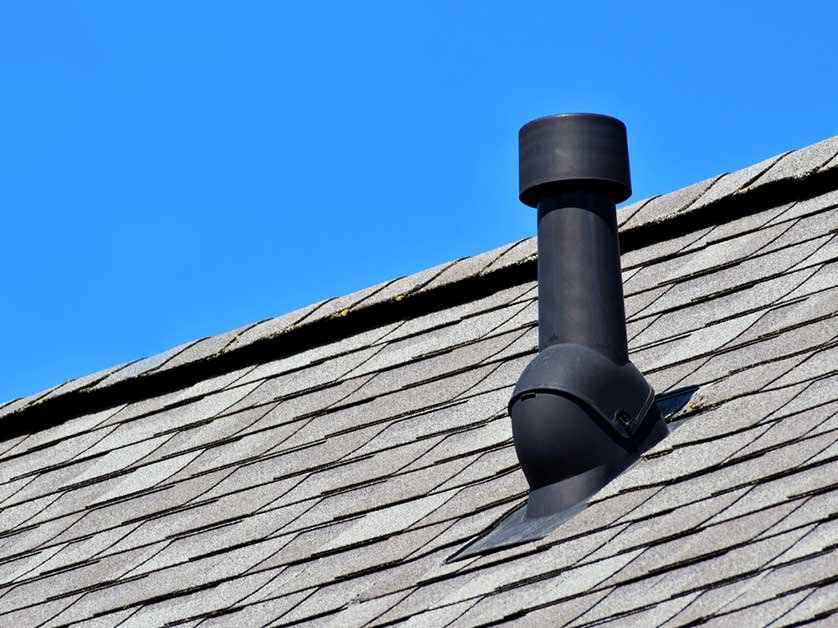
Family Handyman’s roof venting basics say ridge and hood vents let warm air leave near the peak, while turbine vents use wind to pull air out. Gable vents bring air in or out, but they do not move air evenly through a large attic.
Balance Low and High
Warm air rises, so cool air should enter low near the eaves and leave high near the peak. Family Handyman recommends splitting the vent area about evenly between low and high vents.
Common Venting Mistakes
- Blocking soffit vents with insulation or debris.
- Relying on gable vents alone in a large attic.
- Leaving low and high vent area out of balance.
- Skipping the yearly check for nests and stuck turbines.
- Adding a power fan when passive vents would do.
Our attic vent installation and attic structural services crews fix these problems, and our roof installation and repairs team handles related roof work. See also our blog on common gutter damage for the winter side. Our guide on attic airflow mistakes covers these in detail.
What We Check in the Attic
On an attic visit, our crew looks at the soffit openings, the baffles, the exhaust vents, and the underside of the sheathing. We write the findings into a scope with photos that shows where air is blocked.
Roof Vent Questions
Which vent works best for intake?
Family Handyman calls soffit vents the best intake option because they sit low at the eaves and let cool air in. Keep them clear of insulation, cobwebs, and debris so that air can move up toward the peak.
What does a ridge vent do?
Ridge and hood vents let warm air leave near the peak of the roof. Paired with soffit intake, they help move air through the attic and keep temperature and moisture closer to outdoor levels during the year.
Are gable vents enough on their own?
Family Handyman says gable vents can bring air in or out, but they do not move air evenly through a large attic. They often leave parts of the attic poorly ventilated, so pair them with other vents.
How do I know my attic is poorly ventilated?
This Old House lists extreme summer heat, ice dams, frost or moisture under the sheathing, and mold or mildew in the attic as signs. Peeling paint in rooms below the attic can also hint at the problem.
Do turbine vents work well?
Family Handyman says turbine vents use wind to pull air out of the attic. Check them each year for nests or stuck blades, especially if you see ice dams or moisture in the attic space.
Should intake and exhaust be balanced?
Balance matters because warm air rises, so cool air should enter low and leave high. Family Handyman recommends splitting the vent area about evenly between low and high vents for the best airflow through the attic.
Questions About Attic Airflow?
Northeast Gutters & Remodeling can inspect your vents and balance the system.
Speak with us at 860-899-7878 or request your free estimate and we will schedule an attic visit.
About the Author
Thiago Barboza Batista is the owner of Northeast Gutters & Remodeling, a family-owned contractor in Bloomfield, Connecticut, founded as a gutter company in 2004. He oversees seamless gutter, copper gutter, roofing and siding projects for homeowners across Connecticut, from the free on-site estimate to the final inspection.
Sources
- This Old House: Improving Attic Ventilation: Why ventilation matters and signs of problems.
- Family Handyman: Roof Venting Basics: Vent types and mistakes.