A roof sits on top of the attic, and when the attic cannot breathe, the roof pays the price. Trapped heat and moisture slowly damage shingles, decking, and the framing beneath them.
Northeast Gutters & Remodeling sees ventilation problems across Connecticut, from older capes to newer colonials, and the points below explain what poor airflow does and how to spot it early.
Heat in Summer
Family Handyman’s attic ventilation guide says trapped hot air raises cooling costs and that heat baking up from below shortens shingle life.
Condensation in Winter
The Pacific Northwest National Laboratory’s condensation guide explains that warm, humid air escaping into a cold attic condenses on rafters and the underside of the roof sheathing. Ventilation carries moisture out and helps surfaces dry when the weather warms. For the causes behind these problems, read attic airflow mistakes.
| Problem | What causes it | Where it shows |
|---|---|---|
| Shingle wear | Heat baking from below | Curling or aged shingles |
| Condensation | Warm moist air meeting cold sheathing | Frost or damp decking |
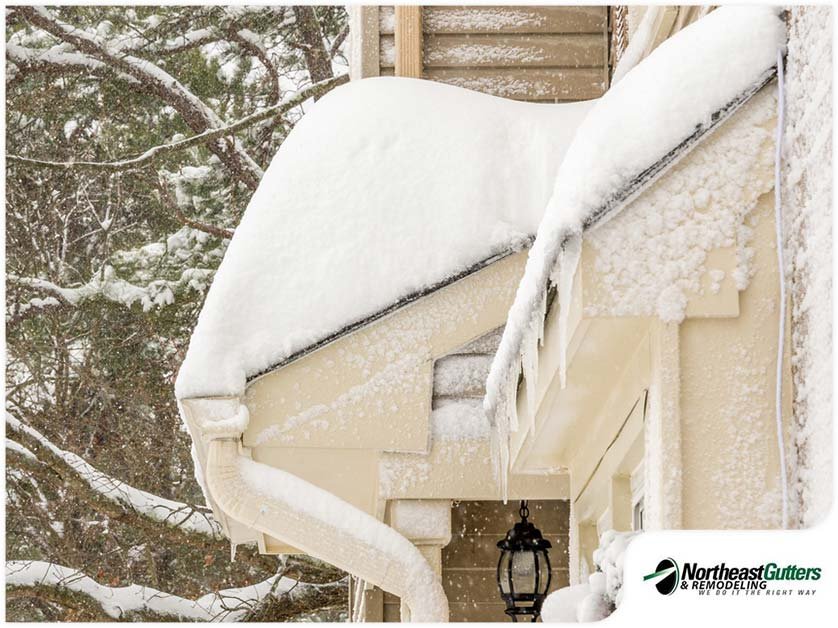
| Ice dams | Snowmelt refreezing at cold eaves | Icicles and edge leaks |
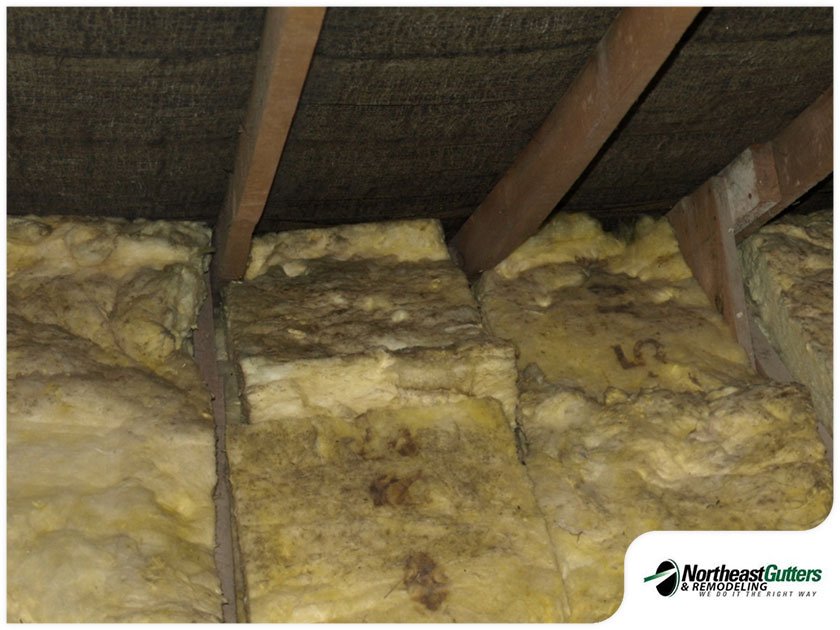
| Mold and rot | Long term moisture | Stains and weak sheathing |
Warning Signs
- Look for frost on rafters or sheathing in winter.
- Check ceilings for water stains.
- Feel the insulation for dampness.
- Notice mold or a musty smell.
- Watch for ice along the eaves.
How to Fix the Airflow
PNNL says intake vents belong low in the soffits and exhaust vents high at the ridge, with baffles keeping soffit vents clear of insulation. Family Handyman suggests about 1 square foot of net free vent area per 150 square feet of attic, split between intake and exhaust. Our guide to roof ventilation explains how a balanced attic works.
Seal the Ceiling First
PNNL calls a well-sealed ceiling air barrier one of the most effective controls, since leaks around lights, wiring, plumbing, and fans feed moisture into the attic. Our attic vent installation and attic structural services teams handle both the airflow and the framing.
See our asphalt shingle roofing page, our ice dam removal service, and our blog on what damages gutters.
Reading the Attic
Up in the attic, our crew checks the deck from below, the insulation edges, the baffles, and the ceiling penetrations. We write the findings into a scope with photos that pinpoints where moisture and heat collect.
Attic Ventilation Questions
How does poor ventilation hurt shingles?
Family Handyman says heat baking up from below shortens shingle life, and trapped hot air raises cooling costs. A balanced attic keeps the temperature closer to the outdoors and protects the roof surface for years.
What causes winter condensation in an attic?
PNNL explains that warm, humid air escaping into a cold attic condenses on rafters and the underside of the roof sheathing. Ventilation carries the moisture out and helps surfaces dry when the weather warms up.
Where should intake and exhaust vents go?
PNNL says intake vents belong low in the soffits and exhaust vents high at the ridge. Baffles keep the soffit vents clear of insulation so air can move past it and reach the top of the roof.
How much venting does an attic need?
Family Handyman suggests about 1 square foot of net free vent area for each 150 square feet of attic, split between intake and exhaust. A roofer can size the system correctly for the layout of your own house.
Can poor ventilation cause ice dams?
Family Handyman lists ice dams among the effects, since snowmelt refreezes on cold eaves. Keeping the attic cold and the ceiling sealed helps reduce the melt that feeds them during a long Connecticut winter season.
Why does the ceiling need air sealing?
PNNL calls a well-sealed ceiling air barrier one of the most effective controls. Leaks around lights, wiring, plumbing, and fans let warm moist air reach the cold attic and condense on the sheathing above it.
Concerned About Your Attic Airflow?
Northeast Gutters & Remodeling can review your vents and recommend fixes for Connecticut homes.
Send us a free estimate request or call 860-899-7878 and we will book an attic inspection.
About the Author
Thiago Barboza Batista is the owner of Northeast Gutters & Remodeling, a family-owned contractor in Bloomfield, Connecticut, founded as a gutter company in 2004. He oversees seamless gutter, copper gutter, roofing and siding projects for homeowners across Connecticut, from the free on-site estimate to the final inspection.
Sources
- Family Handyman: How to Improve Attic Ventilation: Effects and fixes.
- PNNL BASC: Condensation Control in Attics and Roofs, Cold Weather: Condensation and air sealing.