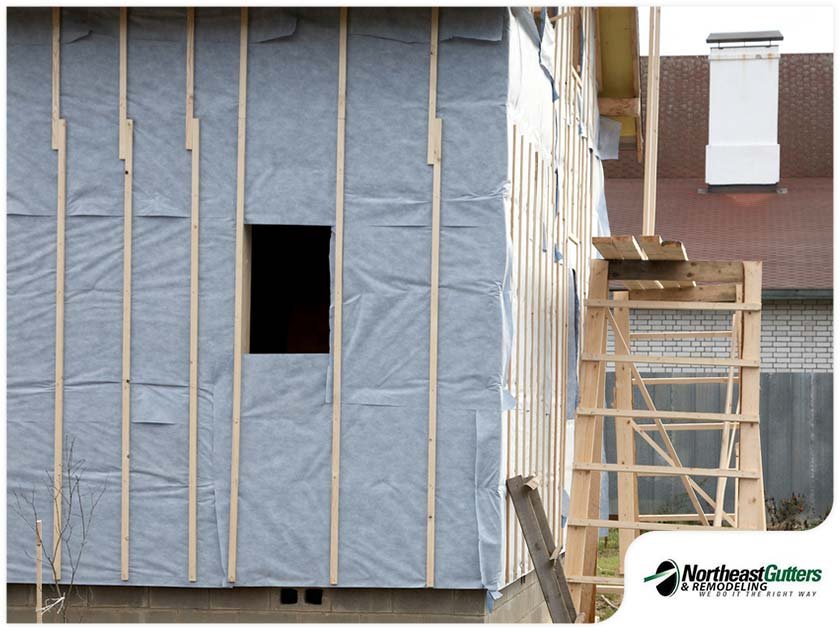
House wrap, also called a weather resistive barrier, sits behind the siding and catches water that gets past the outer layer. For most Connecticut homes, it is a standard part of a sound siding system, not an optional extra.
Northeast Gutters & Remodeling, a Bloomfield, CT siding contractor, installs siding across the Hartford area with attention to the layers behind the finish. This guide explains what the barrier does and how to confirm it is installed correctly.
What a Weather Barrier Does
University of Massachusetts building science research recommends housewrap as a backup weather barrier behind siding (UMass Amherst). It catches water that gets past the siding and drains it outward.
Without that layer, water that enters a seam or a fastener hole has a direct path into the wall. Wind pressure and capillary suction can also draw water into narrow gaps behind siding overlaps.
What the Code Expects
Fine Homebuilding reports that the International Residential Code treats a water resistive barrier behind the cladding as best practice, and that housewrap must follow the manufacturer’s instructions (Fine Homebuilding).
Approved materials include #15 tar paper or an approved alternative, with laps that depend on the product. Our siding installation and repair team plans the laps and fastening around the product’s directions.
Why Installation Quality Matters
The same UMass research describes flashing, and how it integrates with the wrap, as one of the most important details for a wall that sheds water. A well built wall can still leak if that connection is wrong.
In the lab tests described there, water leaked around nails and perforated wraps leaked readily, so the product choice matters too. Fine Homebuilding lists reverse overlaps as a common installation defect and recommends caps on fasteners because staples can tear the material.
| Area | Why the wrap matters | What to confirm |
|---|---|---|
| Windows and doors | Openings are common leak paths | Flashing laps in the right order |
| Corners and transitions | Changes in plane collect water | Corner details are sealed and lapped |
| Siding overlaps | Narrow gaps draw water in | Overlap and drainage are planned |
| Fastener holes | Nails let water past the wrap | Caps and flashing details are in place |
Questions to Ask Your Contractor
- Ask which barrier product goes behind the siding.
- Confirm the laps follow the manufacturer’s directions.
- Check that flashing integrates with the wrap at openings.
- Request photos of the wall before the siding goes on.
- Look for caps on fasteners that could tear the wrap.
- Plan siding overlaps that can drain.
A Crew That Builds From the Wall Out
Our crew builds from the wall out, checking the barrier, flashing, and laps before the siding goes up. Our vinyl clapboard siding installation and trim, soffit, and fascia pages show what that looks like, and our blog on hiring a local siding contractor explains how to choose a team.
House Wrap FAQs
Do I need house wrap behind siding?
UMass research recommends housewrap as a backup weather barrier behind siding, and the code treats a water resistive barrier as best practice. For most Connecticut homes, that layer is a standard part of a sound and well built siding system.
What does house wrap actually do?
House wrap catches water that gets past the siding and drains it outward. Without it, water that enters a seam or a fastener hole has a direct path into the wall cavity and the wood framing behind it.
Does flashing matter if the wrap is installed?
Yes, UMass research describes flashing and its integration with the wrap as one of the most important details for a wall that sheds water. A well built wall can still leak if the flashing connection around an opening is wrong.
Can the wrong house wrap leak?
In the UMass lab tests, water leaked around nails and perforated wraps leaked readily, while non-perforated wraps and felt blocked water best. That is why the product choice and the fastening method both matter for the wall behind your siding.
What are common house wrap installation mistakes?
Fine Homebuilding lists reverse overlaps as a common defect and recommends caps on fasteners because staples can tear the material. It also stresses that the barrier should run continuously to the top of the wall and end properly at penetrations.
How can I tell if my wall has house wrap?
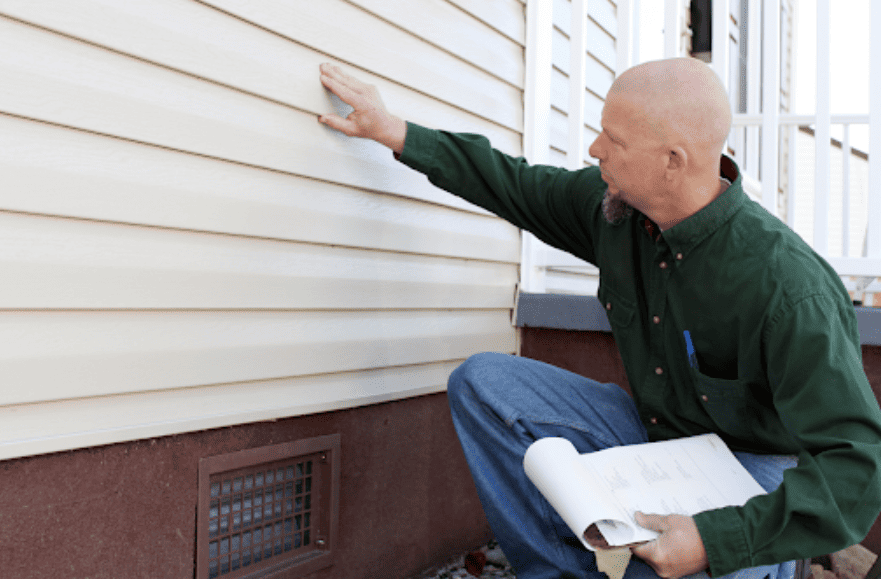
You usually cannot see the barrier once the siding is on, so ask your contractor which product was used and request photos before the siding goes up. A professional can also review the details during a siding inspection or repair.
Questions About What Is Behind Your Siding?
Northeast Gutters & Remodeling can review your siding, flashing, and barrier details and explain what your wall needs.
Reach out through our free estimate page or call 860-899-7878 to schedule a siding walkthrough.
About the Author
Thiago Barboza Batista is the owner of Northeast Gutters & Remodeling, a family-owned contractor in Bloomfield, Connecticut, founded as a gutter company in 2004. He oversees seamless gutter, copper gutter, roofing and siding projects for homeowners across Connecticut, from the free on-site estimate to the final inspection.
Sources
- UMass Amherst Building and Construction Technology: Leaky Housewraps: Housewrap as a backup barrier, flashing, and lab leak tests.
- Fine Homebuilding: What’s Building Code for Housewrap Installation: Code basics, laps, and common installation defects.