
Siding does three jobs at once: it shields the wall from weather, shapes how the house looks from the street, and supports the layers behind it. In Connecticut, where winters are hard and storms are common, all three matter.
Northeast Gutters & Remodeling, a family-owned contractor in Bloomfield, CT, installs siding and repairs wall systems across the Hartford area. Here is how siding works for your home in practice.
1) It Shields the Wall From Weather
Siding is the first line of defense against wind-driven rain, snow, and sun. This Old House’s guide to choosing the best siding says fiber cement, metal, and brick resist moisture, pests, and fire.
Overlaps and fasteners shed most water, but the wall beneath still needs a second layer. In the Fine Homebuilding siding installation article, the author fastens siding to furring strips so an air gap lets the wall drain and dry.
2) It Shapes the Look of the House
Siding sets the profile, color, and rhythm of the facade. This Old House notes that vinyl’s color runs through the material so scratches show less, while wood needs stain or paint.
It also says wood looks natural but needs refinishing about once in four to six years. A well chosen profile can make a house look more balanced, so view samples in daylight.
3) It Supports the Layers Behind It
Siding works with flashing, trim, and the barrier to keep the wall dry. In that same project, flashing tape laps over each sill and a drip cap carries water out and away from each opening.
Each layer has a role: siding sheds water, the barrier drains what gets through, and flashing directs water away from openings. Our flashing installation and replacement crew works at these joints.
| Role | What it does | What to check |
|---|---|---|
| Shield | Blocks rain, snow, and sun | Overlaps and fastener placement |
| Shape | Sets color, profile, and look | Samples viewed in daylight |
| Support | Works with the barrier and flashing | Flashing at openings and corners |
| Maintenance | Keeps the wall performing | Caulk, cracks, and loose pieces |
Maintenance Keeps Siding Working
Good installation keeps all three jobs working together, and upkeep protects that work. When you notice staining or softness on an interior wall, the source may sit in one of these layers, so a professional can trace the path before repairs begin.
Our siding installation and repair, vinyl clapboard siding installation, and custom siding solutions pages show what we install. Our blog on local siding contractors explains how to pick a crew.
Siding Checklist
- Inspect overlaps and fasteners each season.
- View color samples in daylight.
- Check flashing at windows and doors.
- Look for staining or soft spots inside.
- Repair cracked or loose pieces promptly.
- Call a pro to trace moisture.
What Our Crew Reviews on Site
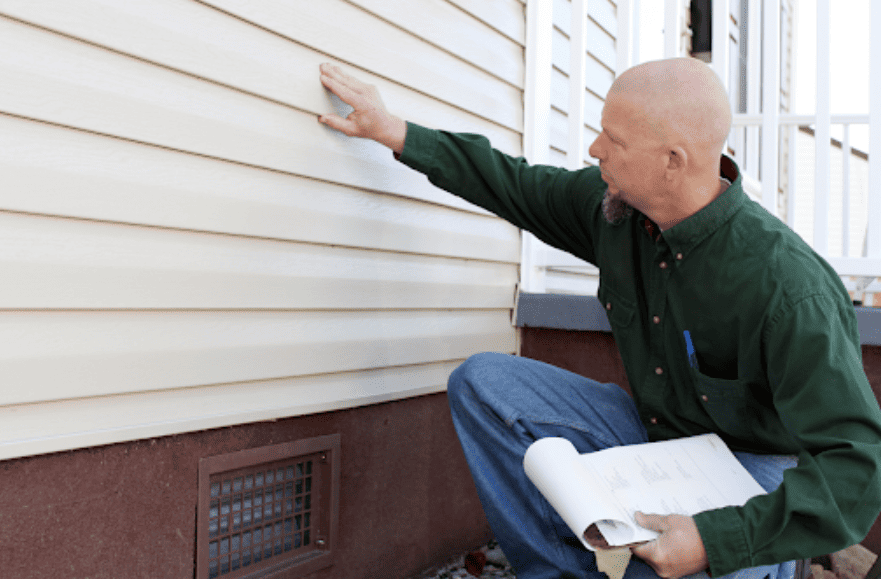
Our crew inspects the walls, trim, flashing, and moisture signs, then writes what it finds into a photo scope. You see how your siding handles all three jobs.
Siding Basics FAQs
What jobs does siding do for a house?
Siding shields the wall from wind-driven rain, snow, and sun, shapes the look of the facade, and works with the barrier and flashing behind it to keep the wall dry. Good installation keeps all three jobs working together over time.
Which siding materials resist moisture best?
This Old House says fiber cement, metal, and brick resist moisture, pests, and fire. Vinyl is affordable and low maintenance, while wood looks natural but needs regular refinishing to hold up in the Connecticut weather.
How does siding drain water behind it?
Fine Homebuilding describes nailing siding over furring strips, which creates an air gap for drainage and drying. Flashing and drip caps at openings send water away from windows and doors, so moisture does not sit in the wall.
How often does wood siding need refinishing?
This Old House says wood siding needs refinishing about once in four to six years. Stain or paint protects the boards from moisture, so plan the upkeep and the schedule before you choose wood for your home.
Why view siding colors in daylight?
Color and profile shape how balanced the house looks, and samples can read differently inside than on the wall. View samples on the sunniest wall in daylight, and note that vinyl color runs through the material itself.
Can interior stains point to a siding problem?
Staining or softness on an interior wall may come from the siding, the barrier, or the flashing, so a professional can trace the water path before repairs begin. That avoids fixing the wrong layer and repeating the work.
Curious How Your Siding Is Doing?
Northeast Gutters & Remodeling can review your siding, flashing, and trim and explain what each layer is doing.
Get in touch through our free estimate page or call 860-899-7878 to plan a wall inspection.
About the Author
Thiago Barboza Batista is the owner of Northeast Gutters & Remodeling, a family-owned contractor in Bloomfield, Connecticut, founded as a gutter company in 2004. He oversees seamless gutter, copper gutter, roofing and siding projects for homeowners across Connecticut, from the free on-site estimate to the final inspection.
Sources
- This Old House: How to Choose the Best Siding for a House: Materials, color, and upkeep.
- Fine Homebuilding: Siding That Lasts a Lifetime: Drainage and flashing details.