Winter damage rarely appears without warning. Most of it builds slowly through small problems in the fall, so a little preparation before the first snow protects the roof and the home below it.
Northeast Gutters & Remodeling is a Bloomfield, CT company that sees these patterns season after season in Hartford County. The steps below help you prepare before the cold arrives.
Clean the Gutters Before Winter
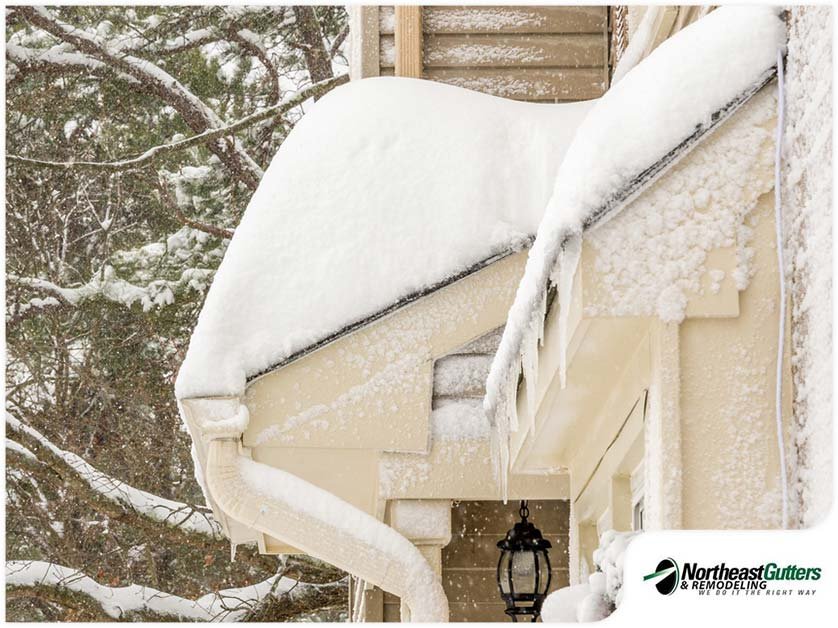
Clogged gutters hold water that freezes along the roof edge. The ice adds weight, pulls at fasteners, and can push water under the shingles.
Connecticut’s insurance regulator lists open gutters and drains among its winter storm tips, since meltwater needs a path off the roof (CT Insurance Department alert). Neglected runs can lead to the damage described in our blog on what causes gutter problems, and our residential gutter systems page covers replacements.
Check Attic Insulation and Ventilation
Green Building Advisor traces ice dams to poor air sealing and insufficient insulation, which let house heat reach the roof (Green Building Advisor).
Balanced ventilation keeps the attic cold and dry, so check that soffit vents are open and not blocked by insulation or stored items. An attic vent installation can restore airflow where it is blocked.
Inspect Shingles and Flashing
Look for cracked, curled, or missing shingles before the season starts. Lifted flashing around chimneys, vents, and valleys is another common entry point for winter water.
ARMA’s guidance is to look from the ground instead of walking the roof (ARMA FAQ). A professional can complete a closer review safely.
Trim Branches Near the Roof
Overhanging branches drop debris into gutters and can scrape shingles during windstorms. Trimming them before winter reduces both risks.
Heavy ice and snow can also bring tree limbs down onto houses, which the Connecticut alert flags as a winter hazard. Cut back limbs that hang over the roof while the weather is still mild.
Plan Snow Removal Carefully
Snow piles up as weight on the structure, and the same alert cautions that roofs can collapse under heavy snow and ice. Pull the first few feet of snow down from ground level with a long handled rake, and stay off a slick roof.
Deep snow or a steep pitch is a job for our rooftop snow removal crew. Ice at the eaves is where our steamed ice removal and ice dam removal options come in.
| Before winter | What to do | Warning sign |
|---|---|---|
| Gutters | Clear leaves and debris in late fall | Overflow or sagging runs |
| Attic | Seal air leaks and keep vents open | Frost or damp insulation |
| Shingles | Check from the ground | Curled, cracked, or missing pieces |
| Branches | Trim limbs over the roof | Debris and scrape marks |
| Snow | Rake the first few feet from the ground | Heavy snow on an older roof |
Your Pre-Winter Checklist
- Clear gutters and test the downspouts in late fall.
- Seal attic air leaks and keep soffit vents open.
- Inspect shingles and flashing from the ground.
- Trim branches that hang over the roof.
- Save the number for snow and ice removal.
- Photograph damage and call your insurer quickly.
A Crew That Prepares Roofs for Winter
Our crew walks the roof edge, attic, and shingles before the season, then writes what it finds into a short scope. You get a clear list of what to fix before the first storm.
Winter Roof Damage FAQs
What should I do to my roof before winter?
Clear the gutters, seal attic air leaks, keep soffit vents open, inspect shingles and flashing from the ground, and trim overhanging branches. Small fixes in the fall prevent the slow damage that builds through the whole winter season.
Why do clogged gutters matter in winter?
Clogged gutters hold water that freezes along the roof edge, and the ice adds weight, pulls at fasteners, and can push water under shingles. Clear leaves and debris in late fall so meltwater has a path off the roof.
What causes ice dams?
Green Building Advisor traces ice dams to poor air sealing and too little insulation, which let house heat melt snow on the roof. Meltwater then freezes again at the cold edge of the roof and stacks up into a dam.
How do I check my roof safely before winter?
ARMA advises inspecting from the ground and avoiding the roof itself. Use binoculars to look for cracked, curled, or missing shingles, then ask a professional for a closer review of the flashing and attic before the first big storm.
Is it safe to clear snow off my roof myself?
Snow adds weight, and the Connecticut alert cautions that roofs can collapse under heavy snow and ice. Pull the first few feet down with a rake while standing on the ground, and hire a pro when the snow is deep or the pitch is steep.
What should I do if winter damage happens?
The Connecticut alert advises contacting your insurer quickly, photographing the damage, and preventing further harm, then waiting for an inspection before permanent repairs. We can walk the roof and edge with you, record what we see, and explain what to fix first.
Ready to Prepare Your Roof for Winter?
Northeast Gutters & Remodeling can inspect your gutters, attic, and shingles before the first storm and explain what to fix first.
Contact us through our free estimate page or call 860-899-7878 to book a pre-winter roof check.
About the Author
Thiago Barboza Batista is the owner of Northeast Gutters & Remodeling, a family-owned contractor in Bloomfield, Connecticut, founded as a gutter company in 2004. He oversees seamless gutter, copper gutter, roofing and siding projects for homeowners across Connecticut, from the free on-site estimate to the final inspection.
Sources
- Connecticut Insurance Department: Consumer Alert: Gutters, drains, roof collapse, tree limbs, and what to do after storm damage.
- Green Building Advisor: Ice Dams, Causes and Fixes: What drives ice dams.
- Asphalt Roofing Manufacturers Association: Frequently Asked Questions: Ground inspection of the roof.