
A roofing project runs smoothly when the scope is clear, the schedule is realistic, and both sides communicate well. The eight tips below help homeowners avoid the most common frustrations.
Northeast Gutters & Remodeling completes roofing projects for homeowners in Bloomfield, Connecticut, and across the state. These habits make the work easier to manage from the first estimate to the final walk through.
Before You Sign
1) Get the scope in writing: Ask for a written scope that lists the tear off, decking, underlayment, flashing, shingles, ventilation, and cleanup. The Connecticut Department of Consumer Protection’s contractor guide says the contract should be signed and dated by both sides.
2) Name one point of contact: Choose one person at the company to answer questions and approve changes. A single contact keeps messages organized and speeds up decisions.
3) Confirm the schedule and payments: Ask for the start date, the finish window, and the weather policy in writing. The same guide suggests three or four payments tied to progress, with a first payment of about a third of the total at most.
Before the Crew Arrives
4) Plan the permit: GAF’s homeowner checklist says to confirm whether the project needs permits and who will pull them. The state guide adds that you stay ultimately responsible, so check with the town before work begins.
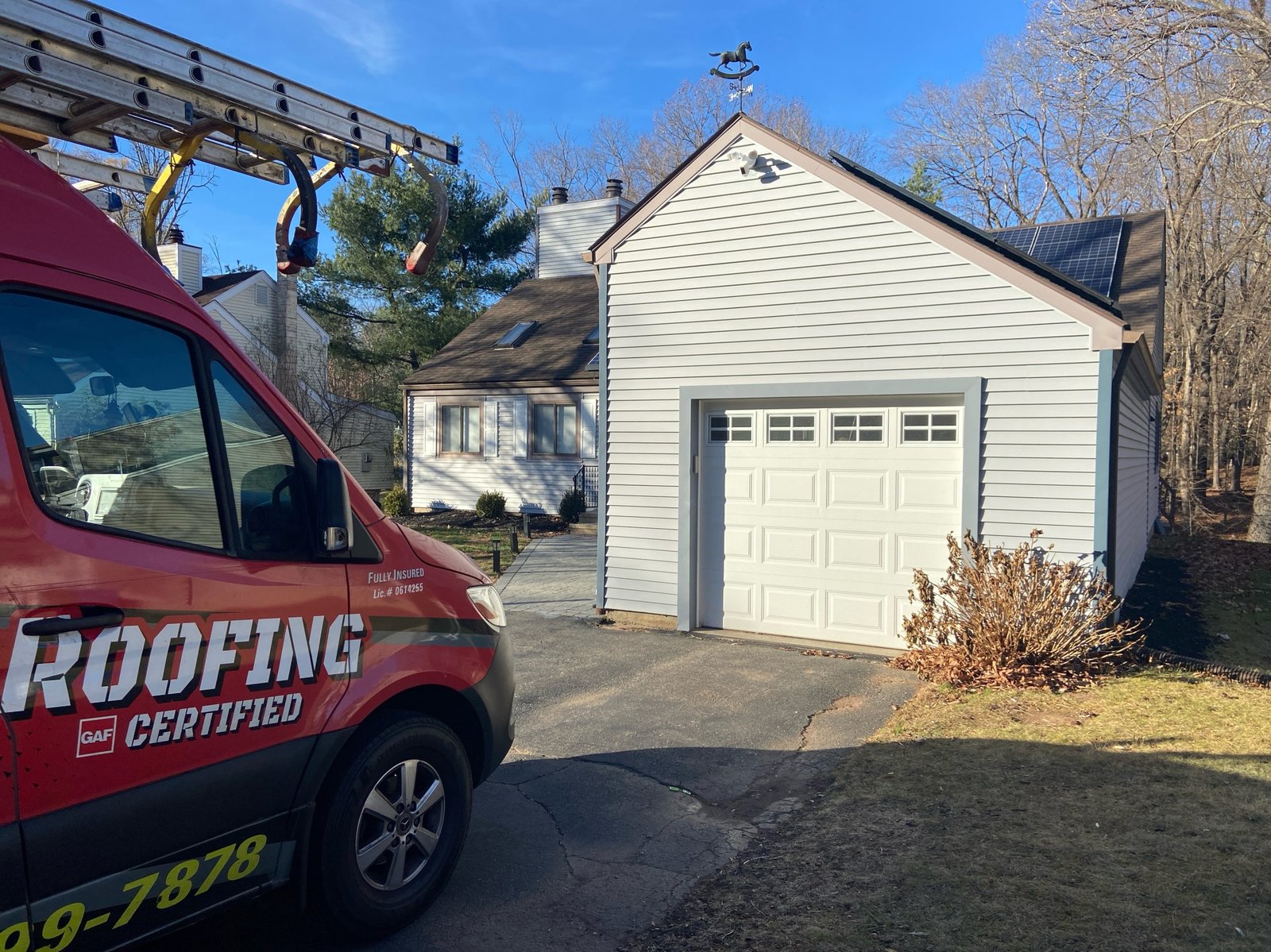
5) Prepare the home: GAF advises moving or covering outdoor furniture, grills, and decor, and moving cars off the driveway the night before. Move valuables out of the attic and lay down a drop cloth, since dust and debris will fall through. For the planning stage, read planning a roofing project step by step.
| Area | Before the crew arrives | Why it helps |
|---|---|---|
| Driveway | Move cars the night before | Gives crews room for material |
| Attic | Clear valuables and cover the floor | Dust falls through the decking |
| Walls inside | Secure mirrors and artwork | Vibration can shake items loose |
| Yard | Cover plants and move decor | Protects against falling debris |
While the Work Happens
6) Check the site each day: Look for debris in the yard at the end of the day and confirm the crew has protected plants and walkways. Report a leak after rain at once, and ask about noise or access issues before they grow.
7) Review changes in writing: The state guide says contract changes should be specific, written, and handed to you as a copy. A written change order keeps the budget accurate and the expectations clear.
At the Finish
8) Complete a final walk through: GAF recommends checking the lawn, gutters, patios, and driveway for debris or damage, and looking for stray nails. Walk the roof edge and flashing with the foreman, and keep the permit, contract, and manufacturer warranty on file.
Our roof installation and repairs, asphalt shingle roofing, and storm damage roof repairs crews follow this process. Our blog on planning a roof replacement budget helps with early planning.
Project Day Checklist
- Move cars and outdoor items before the crew arrives.
- Clear the attic and cover what remains.
- Confirm the permit status with the town.
- Keep each change order in writing.
- Save receipts, the contract, and the warranty.
- Walk the site with the foreman at the end.
What Our Crew Reviews Before Work Starts
On an estimate, our crew looks at the deck, flashing, ventilation, and gutter edges, and we write the findings into a scope with photos. That scope becomes the document you and the crew follow from the first day to the final walk through.
Roofing Project FAQs
How much deposit is reasonable for a roofing job?
The Connecticut Department of Consumer Protection says money upfront for materials is reasonable but generally no more than one third of the total. It recommends payments tied to progress, with the last payment after the work satisfies you.
Who pulls the building permit for a new roof?
Either you or the contractor can apply, and the contract can assign it to the contractor, according to the state guide. The homeowner remains ultimately responsible, so confirm with the town that the permit is approved first.
What should I do with my attic before roofing?
GAF advises moving valuables out of the attic and laying down a drop cloth, since dust and debris will fall through the decking. Cover what remains and plan for noise from the crew overhead on the work days.
Why should changes to the scope be written?
The state guide says contract changes should be specific, written, and handed to you as a copy. A signed change order keeps the budget accurate and the expectations clear for both sides throughout the project.
What should I check at the final walk through?
GAF suggests checking the lawn, gutters, patios, and driveway for debris or damage and looking for stray nails around the property. Review the roof with the contractor, and ask for a magnetic sweep if you find nails.
Which documents should I keep after the project?
GAF recommends keeping copies of the permit, the contract, insurance information, and the manufacturer warranty. The state guide also says to keep written change orders and a receipt for each payment you make during the project.
Ready to Plan Your Roofing Project?
Northeast Gutters & Remodeling can walk you through the scope, schedule, and permit before the first day.
Call us on 860-899-7878 or send a request from our free estimate page and we will set up a roof walk.
About the Author
Thiago Barboza Batista is the owner of Northeast Gutters & Remodeling, a family-owned contractor in Bloomfield, Connecticut, founded as a gutter company in 2004. He oversees seamless gutter, copper gutter, roofing and siding projects for homeowners across Connecticut, from the free on-site estimate to the final inspection.
Sources
- Connecticut DCP: Contracting and Working With a Home Improvement Contractor: Contract, payment, and permit guidance.
- GAF: The Ultimate Homeowners Checklist for Your Next Roofing Project: Before, during, and after checklist.