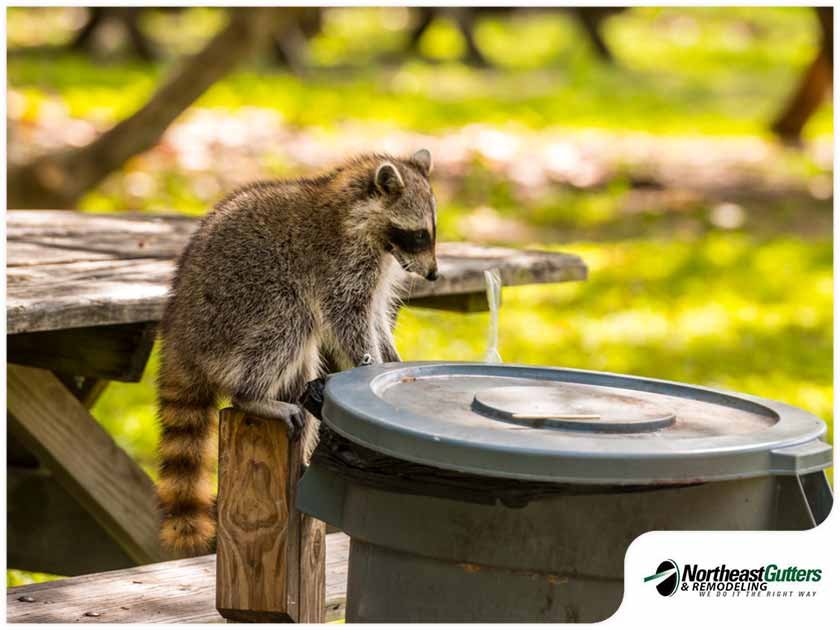
Gutters and downspouts give raccoons height, shelter, and a route toward the roof. Blocking those features keeps animals out and protects the roof edge.
Northeast Gutters & Remodeling in Bloomfield, Connecticut sees animal damage across the state, from torn screens to chewed fascia, and this guide explains how to make downspouts less inviting without harming wildlife.
Why Raccoons Use Downspouts
The Connecticut Department of Energy and Environmental Protection says raccoons climb trees, downspouts, vines, and trellises to reach roofs. Holes near the eaves and unscreened chimneys are common entry routes, as described on its raccoon problems page.
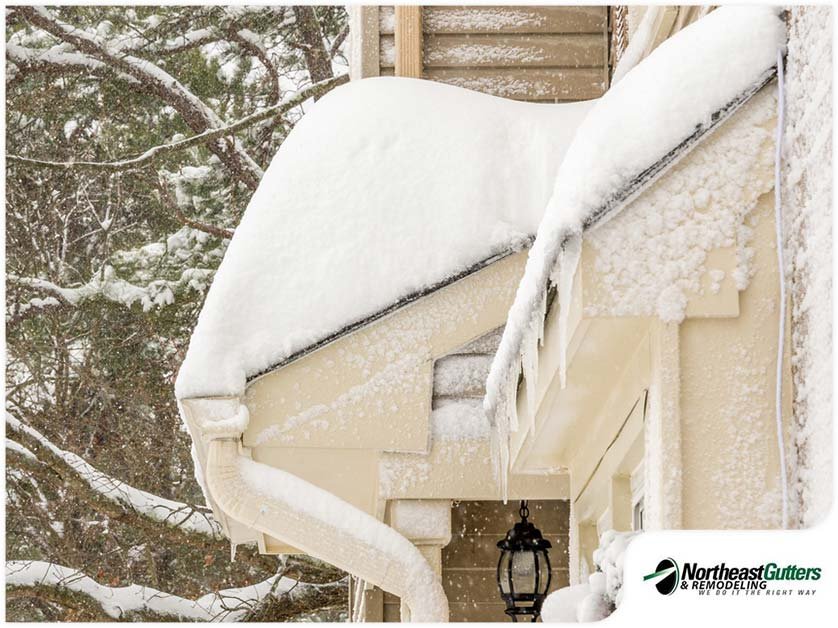
Loose or damaged downspouts make the climb easier, since a pulled-away section can open a gap at the wall.
Signs of Animal Activity
- Scratches or chewed edges around the downspout.
- Droppings or debris at the base.
- Dents or bent sections near the top.
- Gaps where the downspout meets the wall.
- Noises in the walls or attic.
Check for these signs each spring and fall. Wear gloves and a HEPA respirator around droppings, because DEEP warns that raccoon feces can carry roundworm spores.
Exclusion Steps That Work
DEEP recommends repairing roof holes, fitting a chimney cap, and trimming trees and shrubs near the house. Securing garbage cans and keeping pet food indoors also helps.
PNNL’s gutter guide says downspout screens need regular cleaning or they clog, and that flap valves are the preferred option for keeping rodents out. Leaf guards also discourage animals from nesting in gutters.
| Step | Why it helps | Who handles it |
|---|---|---|
| Repair roof and eave holes | Closes entry routes | Roofer or carpenter |
| Fasten loose downspouts | Removes easy gaps at the wall | Gutter crew |
| Cap the chimney | Blocks a den site | Chimney or roofing pro |
| Trim branches | Cuts the climbing route | Homeowner or arborist |
| Secure garbage and pet food | Removes the food draw | Homeowner |
Timing and Wildlife Rules
DEEP says females seek dens in attics, flues, and sheds to raise young, with whelping from late March through May. It advises confirming the raccoons have left before sealing openings.
State law requires trap owners to check traps daily and tag them, and DEEP notes that licensed Nuisance Wildlife Control Operators can handle evictions, trapping, and repairs. For live animals, call a licensed operator.
Our gutter repairs team fastens loose downspouts, our gutter cleaning and maintenance programs keep screens clear, and our trim, soffit, and fascia crew repairs chewed edges. Read our post on common causes of gutter damage for more.
Our Role After Wildlife Is Cleared
When we arrive, our crew looks at downspout fasteners, gaps along the eaves, and chew marks on the fascia. We write the repairs into a scope along with photos, ready for you to approve after the animals are gone.
Raccoon Questions From Connecticut Homeowners
Why do raccoons climb downspouts?
DEEP says raccoons climb trees, downspouts, vines, and trellises to reach roofs. Holes near the eaves and unscreened chimneys are common entry routes, so loose or pulled-away downspouts can make the climb easier for them.
Can I trap a raccoon myself in Connecticut?
Connecticut law requires trap owners to check traps daily and tag them with their name, and homeowners should understand state trapping laws first. A licensed Nuisance Wildlife Control Operator can handle trapping, evictions, and repairs.
When should I avoid sealing an opening?
Females seek dens in attics, flues, and sheds to raise young, with whelping from late March through May. DEEP advises confirming the raccoons have left before capping a chimney or sealing openings in the house or garage.
Do downspout screens keep animals out?
PNNL says flap valves are the preferred option for keeping rodents out, and downspout screens need regular cleaning or they clog. Leaf guards also discourage animals from nesting in gutters, which helps protect the roof edge.
Is raccoon waste dangerous to clean up?
DEEP says raccoon feces can carry roundworm spores, and it advises a HEPA respirator and gloves when working near them. Clean up in ways that avoid raising dust, or call a professional who has the right protective gear.
Can you repair gutter damage caused by animals?
Yes, we can fasten loose downspouts, repair chewed fascia and trim, and clear damaged screens. We recommend dealing with the wildlife first, then writing the repairs into a scope with photos for your own records.
Animal Damage at the Roof Edge?
Northeast Gutters & Remodeling can repair downspouts, fascia, and screens once wildlife is cleared.
Call 860-899-7878 or get a free estimate and we will book a time.
About the Author
Thiago Barboza Batista is the owner of Northeast Gutters & Remodeling, a family-owned contractor in Bloomfield, Connecticut, founded as a gutter company in 2004. He oversees seamless gutter, copper gutter, roofing and siding projects for homeowners across Connecticut, from the free on-site estimate to the final inspection.
Sources
- CT DEEP: Problems With Raccoons: Entry routes, exclusion, timing, and trapping rules.
- PNNL: Gutters and Downspouts: Flap valves and downspout screens.