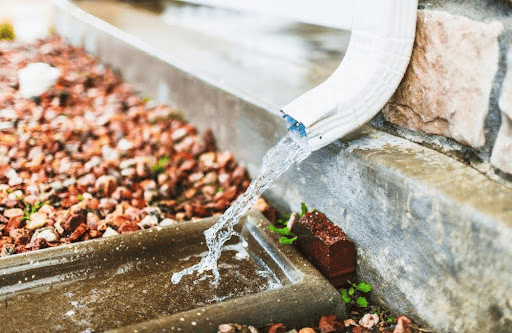
A downspout works only when it sends roof water to ground that can absorb it. Poor placement sends that water back against the foundation, the walkway, or the crawl space wall.
Northeast Gutters & Remodeling helps Rocky Hill, Connecticut homeowners place downspouts so roof water leaves the property cleanly.
Why Downspout Location Matters
Each downspout collects water from one section of roof. If the outlet sits right against the foundation, the soil beside it can stay wet long after the rain stops.
The University of Connecticut NEMO program recommends directing downspouts away from the foundation and avoiding paved surfaces. For homes with basements, its guidance points to discharge about 10 feet from the foundation.
A sloped lot may need more distance or a buried line. Correct placement starts with where the water lands, not where the pipe looks neat.
Where Downspouts Should Discharge
The EPA suggests redirecting downspouts to lawn or garden areas where water can soak into the ground, and it reminds owners to consider local regulations. For where the gutter itself should hang, see is your gutter hung in the right place.
- Away from the foundation: aim for about 10 feet of clear ground between the outlet and the wall when the lot allows it.
- Onto grass or planting beds: soft ground soaks up water better than bare soil or pavement.
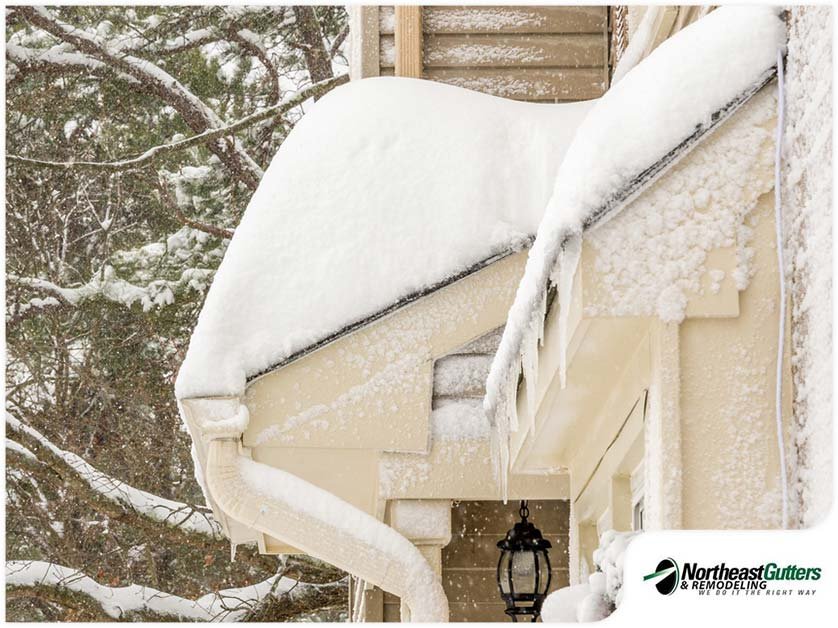
- Away from walkways and driveways: runoff that crosses paving can freeze in cold weather and create slip hazards.
- Not into a window well or low corner: water can pool there and drain back toward the basement.
Spacing and Placement Along the Gutter
Downspouts need enough outlets to handle the roof area that drains into each one. Place an outlet at each valley and at the low corners of the gutter run, so water does not travel far inside the trough.
Long runs collect more debris and can overflow during storms. Keep each outlet clear of shrubs, air conditioning units, and fence posts.
Those objects block the splash path and can trap water beside the foundation. Check the elbow at the bottom of each pipe too, since a loose joint can spill water next to the wall.
Choosing Extensions, Elbows, and Buried Drains
A short extension often works for a flat, open yard. A sloped lot or a patio in the discharge path may call for a longer extension or an underground line.
Buried drains need a clean outlet at the far end. Otherwise they can silt up and send water back into the yard.
| Situation | Recommended approach | What to check |
|---|---|---|
| Flat yard with open ground | Extension toward about 10 feet | Grade slopes away from the wall |
| Patio or walkway in the path | Underground line or diverter | Outlet is clear and not against a wall |
| Sloped lot toward the house | Longer discharge or buried drain | Outlet lands lower than the foundation |
| Crawl space or low corner | Extension plus regrading | Soil does not pool at the wall |
What Our Crew Checks During a Downspout Review
During a review, our crew looks at each outlet, the splash path, and the grade at the foundation. We write each finding into a scope with the location, the fix, and a photo.
We walk the lot after rain when possible, because standing water shows where the ground fails. The homeowner can see each change before work starts.
Fixing Common Downspout Problems
Most placement problems come from outlets installed in a hurry or left unadjusted after landscaping changed the grade. A splash block helps only when it moves water far enough from the wall.
For repair options, see our gutter repairs for leaks, pitch, and fasteners page. For buried lines, see underground drainage installation.
Clogged gutters also push water past the outlets, so a regular cleaning schedule matters. Our gutter cleaning and maintenance programs include a downspout check after each visit.
For background on how gutter damage starts, read the common causes of gutter damage.
Frequently Asked Questions About Downspout Placement
How far should a downspout discharge from the house?
For a home with a basement, the University of Connecticut NEMO program points to about 10 feet from the foundation when the lot allows it. Choose grassed or planted ground rather than pavement, and use an underground line if space is limited.
Can a downspout drain onto a driveway?
It is better to avoid it, because water that crosses pavement can freeze in cold weather and create slip hazards. A short diverter or an extension that moves the outlet onto soil keeps runoff away from the foundation.
Do downspouts need splash blocks?
Splash blocks help when they move water far enough from the wall. A block placed right beside the foundation only shifts the wet area closer to the house, so an extension usually works better for a longer discharge.
How many downspouts does a home need?
The count depends on roof area, roof pitch, and the length of each gutter run. Outlets belong at valleys and low corners, and a review of your roof and gutters is the most reliable way to confirm the number.
What happens if a downspout drains next to the foundation?
Soil beside the wall can stay saturated after rain, and that moisture can seep toward the foundation. Over time the wet area can contribute to basement dampness and grading problems, and moving the outlet is often a simple fix.
Do I need a permit to change downspout drainage?
Permit rules depend on the town and the scope of the work, and some towns require permits for buried drain lines or grading changes. Check with the local building department before digging, and we can point you to the right office during your review.
Schedule a Downspout Placement Review
If water settles near your Rocky Hill foundation after rain, a placement review can show the cause. Call 860-899-7878 or request a visit through our free estimate form.
We will walk the lot with you and explain each recommended change in plain terms.
About the Author
Thiago Barboza Batista is the owner of Northeast Gutters & Remodeling, a family-owned contractor in Bloomfield, Connecticut, founded as a gutter company in 2004. He oversees seamless gutter, copper gutter, roofing and siding projects for homeowners across Connecticut, from the free on-site estimate to the final inspection.
Sources
- UConn NEMO, Roofs and Downspouts: Discharge about 10 feet from foundations with basements and avoiding paved surfaces.
- EPA, Soak Up the Rain: Disconnect or Redirect Downspouts: Redirect runoff to lawn or garden areas, not paved surfaces, and consider local regulations.