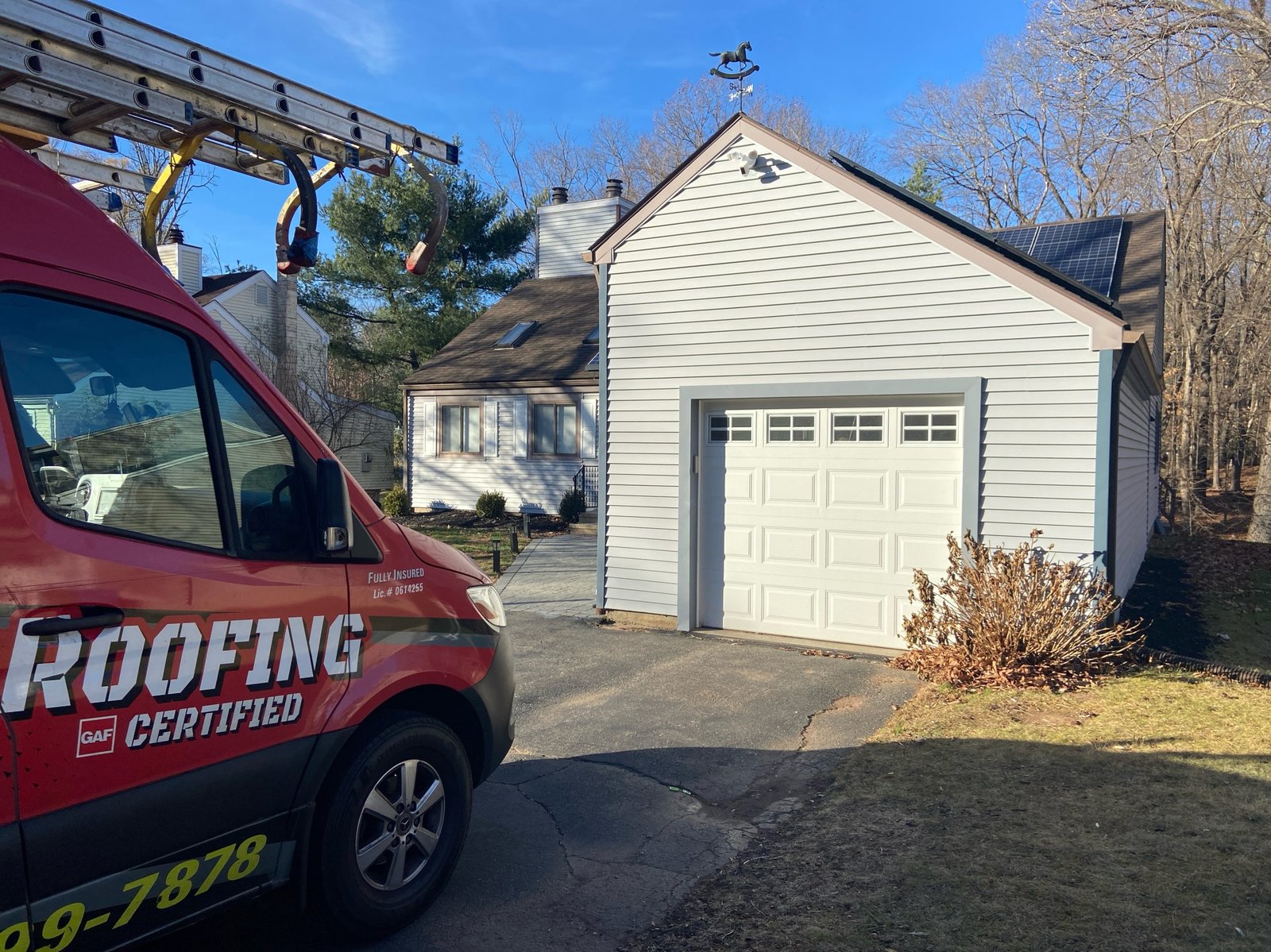

Repeat clogs and ladder accidents often trace back to three habits: reaching too far from the ladder, flushing debris into the downspout and stopping as soon as the trough looks clear. Each one is easy to fix once you know what to look for.
Northeast Gutters & Remodeling cleans and repairs gutters for homeowners in Simsbury, Connecticut, and these are the mistakes we see on homes where a clog keeps coming back.
Mistake 1: Reaching Too Far From the Ladder
Leaning sideways to reach a distant section is a classic way to lose your balance. Move the ladder every few feet instead of stretching.
Ohio State University’s safety guidance says to set the ladder at a 4 to 1 ratio, with the base 1 foot out for every 4 feet of height.
It also says to keep 3 points of contact. The U.S. Consumer Product Safety Commission adds that you should keep your body centered between the rails and have a helper hold the bottom of the ladder.
Mistake 2: Flushing Debris Into the Downspout
Hosing debris toward the outlet pushes it into the elbow, where it packs together and forms the clog you were trying to clear. Scoop the bulk out first by hand or with a gutter scoop, then rinse from the far end.
If water still backs up, the blockage is usually near the bottom elbow. Clear it from the bottom instead of forcing the hose higher into the pipe. For an easier routine, read tips for simpler gutter cleaning.
Mistake 3: Stopping When the Trough Looks Clear
A clear trough can still have a slow outlet, a sagging section or a seam that drips. Run water through the system and watch where it moves.
| Check after cleaning | What it shows | Next step if you see a problem |
|---|---|---|
| Water flow at each outlet | Whether the downspout drains freely | Clear the elbow from the bottom |
| Pooling in one spot | A low section or a sagging hanger | Re-hang or adjust the run |
| Drips at a seam | Failed sealant or a loose joint | Repair the seam |
| Water near the foundation | A downspout that empties too close to the house | Add an extender to move the water out |
How Often Simsbury Homes Should Clean
The Connecticut Insurance Department’s winter advisory asks homeowners to keep gutters, drains and downspouts clear of debris. The right rhythm for cleaning depends on how many trees overhang your roof.
Plan a cleaning after the leaves drop in fall and another in spring, then check after major storms. Our gutter cleaning and maintenance programs set up that schedule for you.
Where the Water Should Go After Cleaning
A clean gutter still causes trouble if the downspout empties right beside the house. UConn’s NEMO program says a house with a basement should send roof runoff at least 10 feet from the foundation.
Puddles near the foundation after a rain mean a downspout extender is worth adding. Our guide to the common causes of gutter damage explains what else to watch for.
When to Skip the Ladder and Call a Professional
Call a professional when the roof is steep, the gutters are two stories up or the ground is soft or uneven. A gutter that sags, leaks at a seam or pulls from the fascia also needs a gutter repair, not just a cleaning.
On a service visit, our crew clears the run, tests the flow at each outlet and checks the hangers, seams and fascia. Homeowners who dislike cleaning can also look at gutter guard installation, and our page on gutter installation in Simsbury covers the local work we do.
Gutter Cleaning Questions From Simsbury Homeowners
How often should I clean my gutters in Simsbury?
The state advises clearing gutters and downspouts of debris, and the right schedule depends on your trees. A cleaning after leaves drop in fall and another in spring is a practical baseline, with extra checks after storms.
What is the safest way to set up a ladder for gutter cleaning?
Ohio State University advises a 4 to 1 ratio, with the base 1 foot out for every 4 feet of height, and 3 points of contact. Use firm, stable ground, keep your body centered between the rails and have a helper hold the bottom.
Should I flush gutters with a hose?
Scoop out the bulk of the debris first, then rinse from the far end toward the outlet. Hosing debris straight toward the downspout pushes it into the elbow, where it packs together and can create the clog you were trying to remove.
Why does water back up at the bottom of my downspout?
The blockage is usually in the bottom elbow, where debris packs together. Clear it from the bottom instead of forcing a hose higher into the pipe, and then run water through the system to confirm that it flows freely.
Do gutter guards eliminate cleaning?
Guards can reduce how much debris gets in, but a system still needs periodic checks of the outlets, seams and hangers. Ask the installer what the guard does with fine debris and how you would clean it.
How far from the house should a downspout empty?
UConn’s NEMO bulletin says at least 10 feet from the foundation for a house with a basement. An extender is a simple way to push the water out past the walls and footing.
Get a Gutter Cleaning and Flow Test
Tired of clogs that keep returning? Call 860-899-7878 or request a free estimate and we will inspect the system and explain what it needs.
About the Author
Thiago Barboza Batista is the owner of Northeast Gutters & Remodeling, a family-owned contractor in Bloomfield, Connecticut, founded as a gutter company in 2004. He oversees seamless gutter, copper gutter, roofing and siding projects for homeowners across Connecticut, from the free on-site estimate to the final inspection.
Sources
- Ohio State University EHS, ladder safety: the 4 to 1 setup ratio, 3 points of contact and stable ground.
- U.S. Consumer Product Safety Commission, ladder safety tips (archived): keeping your body centered between the rails and using a helper.
- Connecticut Insurance Department, consumer advisory (December 2024): keeping drains, gutters and downspouts free of debris.
- UConn NEMO, Disconnecting Impervious Areas at Home: Rooftops: where to discharge roof runoff relative to the foundation.