Flashing is behind a large share of roof leaks. It is the thin metal that seals joints where the roof meets chimneys, walls, vents, and valleys, and small failures there can let water in for months.
Northeast Gutters & Remodeling, a family-owned contractor in Bloomfield, CT, repairs roof leaks for homeowners in Manchester, Connecticut, and nearby towns. The guide below shows how to prevent flashing failure before it becomes a larger repair.
What Flashing Does
Flashing directs water away from the joints where the roof changes direction or meets another surface. It works with the shingles, underlayment, and sealant to keep the structure dry.
Why Chimney Flashing Fails
Loa Construction’s guide to chimney flashing damage explains that temperature swings make the roof and chimney expand and contract at different rates. That loosens fasteners and warps metal, and freeze and thaw cycles widen the gaps.
It also names installation shortcuts as a major cause, such as skipping counter flashing or leaving off a cricket on a wide chimney. Cracked mortar and crumbling brick can loosen counter flashing too.
Why Valleys Leak
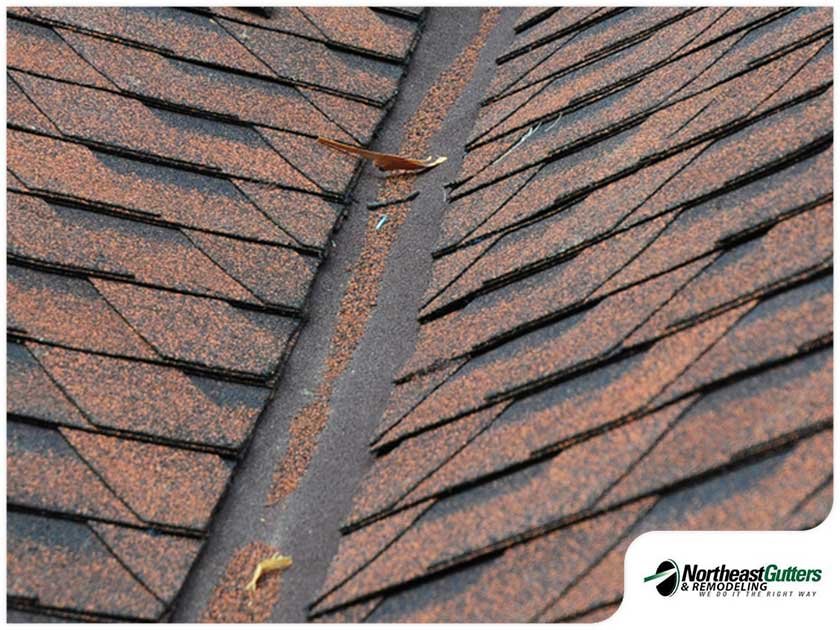
GAF’s article on roof valleys says valleys collect the most water on a roof because two slopes drain into one channel. Leaves and twigs can clog them and push water under the shingles.
GAF also notes that closed valleys depend on careful installation, since small mistakes can cause leaks. Our flashing installation and replacement crew rebuilds these joints with care.
| Trouble spot | What goes wrong | What helps |
|---|---|---|
| Chimney base | Gaps where metal meets masonry | Counter flashing set into mortar |
| Roof valley | Debris pushes water under shingles | Regular clearing and inspection |
| Wall intersection | Loose or missing step pieces | Individual step flashing |
| Vents and skylights | Dried sealant and loose fasteners | Inspection after storms |
Warning Signs to Watch For
Look for stains or peeling paint on ceilings and walls near the chimney, and for drips during storms. Hidden problems include rotted decking, wet insulation, and higher energy bills.
On the roof, watch for rusted, cracked, or missing flashing and gaps where metal meets masonry. A white powdery residue on the chimney can also point to moisture trouble.
Repair It Properly
Loa Construction says caulk alone is rarely a lasting fix. A sound repair removes the damaged flashing, replaces rotted decking, and installs a layered system with apron flashing, step flashing, a back pan, and true counter flashing.
Our chimney flashing replacement and installation and custom copper flashing services follow that approach. Our roof installation and repairs team can also check the shingles around the joint.
Prevention Checklist
- Inspect the roof twice a year and after major storms.
- Clear leaves and twigs from valleys.
- Repoint loose mortar around the chimney.
- Trim overhanging branches.
- Replace the flashing during a reroof.
- Fix small leaks promptly.
What Our Crew Reviews on Site
On an estimate, our crew looks at the chimney base, valleys, wall joints, and vent boots, along with the ceiling below. We write the findings into a scope with photos.
Our blog on gutter damage and its common causes shows how roof edge problems connect to the joints above.
Roof Flashing FAQs
Can caulk fix failing flashing?
Loa Construction says caulk alone is rarely a lasting fix for chimney flashing. A sound repair removes the damaged metal, replaces rotted decking, and installs layered flashing set into the masonry joints so the chimney stays sealed.
Why do chimneys leak after cold winters?
Temperature swings make the roof and chimney expand and contract at different rates, and freeze and thaw cycles widen gaps. Over a Connecticut winter that movement can loosen fasteners and warp the metal around the chimney base.
Why are roof valleys so leak-prone?
GAF says valleys collect the most water because two slopes drain into one channel, and debris can clog them. Clear leaves and twigs from the valley, and have a professional check them after storms and heavy wind.
How often should flashing be inspected?
GAF suggests a professional inspection about twice a year and after storms, and Loa Construction recommends annual checks and a look after major storms. Early repairs cost less than damage to decking, insulation, and ceilings below.
What signs show flashing has failed inside the house?
Look for stains or peeling paint on ceilings and walls near the chimney, and for drips during storms. Hidden signs include wet insulation, rotted decking, and higher energy bills from the lost insulation value in the attic.
Should flashing be replaced during a reroof?
Loa Construction advises installing new flashing during a reroof rather than reusing old metal. Fresh flashing ties into the new shingles and underlayment, so the joints work as one system for many years after the project.
Worried About a Roof Leak?
Northeast Gutters & Remodeling can inspect your flashing and explain what needs repair.
Pick up the phone at 860-899-7878 or send a note from our free estimate page to line up a roof check.
About the Author
Thiago Barboza Batista is the owner of Northeast Gutters & Remodeling, a family-owned contractor in Bloomfield, Connecticut, founded as a gutter company in 2004. He oversees seamless gutter, copper gutter, roofing and siding projects for homeowners across Connecticut, from the free on-site estimate to the final inspection.
Sources
- Loa Construction: Flashing Damage Around the Chimney: Chimney flashing causes and repairs.
- GAF: What Is a Roof Valley: Valley types and inspection.