Nature wears down a roof in steady, quiet ways and in sudden storms. In Hartford County, Connecticut, freezing winters, hot summers, wind, and falling limbs each leave marks on an aging roof that are worth checking.
Northeast Gutters & Remodeling is a family-owned contractor based in Bloomfield, CT, and inspects and repairs roofs across the area. Here is how the most common forces show up on the shingles and what to look for.
Sun and Heat
Sun is the quiet culprit on asphalt shingles, because it slowly erodes the mineral grit on the surface. Angi’s piece on granule loss treats a little shedding as normal for an aging roof.
Bare patches near the gutters are a clue. Without that grit, UV light can crack, split, or curl the shingle underneath.
Freeze and Thaw
The Pacific Northwest National Laboratory’s guide to condensation control in cold-weather attics explains that warm, humid indoor air leaking into a cold attic can freeze as frost on the roof sheathing. When that frost melts in warmer periods, the sheathing and framing must absorb and dry the water.
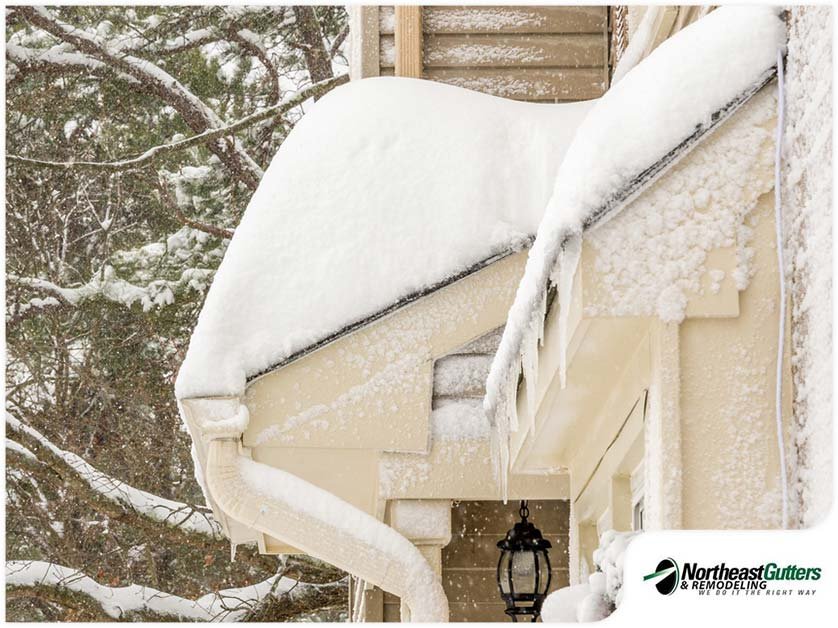
The guide also says ventilation keeps the roof deck cold so snow does not melt from below and refreeze at the eaves. Our ice dam removal and attic vent installation services address both sides of that problem.
Wind and Storms
Wind lifts shingles loose, especially where the roof is older and the sealant has weakened. A single storm can remove several shingles in one area.
After a storm, look from the ground for missing pieces and dented or displaced sections. Our storm damage roof repairs team can replace damaged shingles.
| Force | What it does to the roof | What to look for |
|---|---|---|
| Sun and heat | Wears away granules | Bare, flattened spots and dry shingles |
| Freeze and thaw | Moves moisture into the deck | Frost, damp wood, and ice at the eaves |
| Wind | Lifts weakened shingle tabs | Missing or displaced shingles |
| Falling limbs | Rub and drop debris | Scuffed spots and damp patches |
Falling Limbs and Debris
Branches that hang over the roof rub the shingles and drop debris that holds moisture. In wet weather, that moisture can keep an area damp long enough to speed up wear.
Trimming limbs back from the roof is one of the simplest ways to slow that process. Our roof installation and repairs crew can replace worn sections.
Moisture From Above and Below
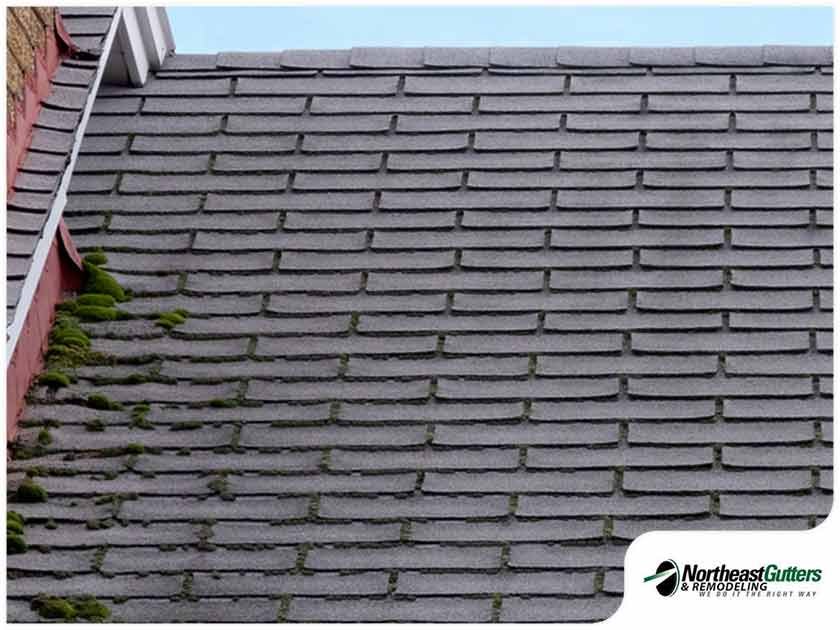
Shade from trees keeps the roof damp longer after rain, which encourages algae and moss. The stains are mostly cosmetic, but moss can lift the edges of shingles over time.
The PNNL guide warns that repeated or prolonged moisture can cause rot and swelling in wood sheathing and can corrode metal fasteners. Check the attic for dark spots on the deck after a wet season, and see our blog on gutter damage and its causes for related signs.
Aging Roof Checklist
- Scan the shingles from the ground for bare spots.
- Check the attic deck for frost, dark spots, or damp wood.
- Look for missing shingles after storms.
- Trim limbs that hang over the roof.
- Clear debris from the valleys and gutters.
- Book an inspection for an older roof.
What Our Crew Looks At on Site
On an estimate, our crew looks at granule wear, edge condition, vents, and the attic below, and we write the findings into a scope with photos. That shows how much life the roof has left and what to fix first.
Roof Aging FAQs
What does sun do to asphalt shingles?
Angi describes the mineral grit on shingles wearing away over time under sun and heat, and a little loss is normal as a roof ages. Bare patches deserve a closer look because UV light can then crack the shingles.
Why check the attic after winter?
Frost on the underside of the roof sheathing melts in warmer periods, and the wood must absorb and dry that water. Dark spots or damp wood on the deck after winter are worth a closer look by a pro.
How does frost form in an attic?
Warm, humid indoor air that leaks into a cold attic can condense on cold surfaces and freeze as frost on the roof sheathing. When it melts in warmer periods, the sheathing must absorb and dry the water.
How does ventilation help in winter?
The PNNL guide says ventilation keeps the roof deck cold so snow does not melt from below and refreeze at the eaves. Air sealing the ceiling plane also limits condensation and ice dams in cold weather.
Can wind damage an older roof quickly?
Wind lifts shingles loose, especially where the roof is older and the sealant has weakened, and a single storm can remove several shingles in one area. Check from the ground after storms for missing or displaced pieces.
Are moss and algae a roof problem?
Algae stains are mostly cosmetic, but moss can lift the edges of shingles over time, and shade keeps the roof damp longer after rain. Check the attic deck for dark spots after a wet season to be sure.
Wondering How Much Life Your Roof Has Left?
Northeast Gutters & Remodeling can inspect the shingles, vents, and attic and tell you what the weather has done.
Message us through our free estimate page or call 860-899-7878 to book a roof inspection.
About the Author
Thiago Barboza Batista is the owner of Northeast Gutters & Remodeling, a family-owned contractor in Bloomfield, Connecticut, founded as a gutter company in 2004. He oversees seamless gutter, copper gutter, roofing and siding projects for homeowners across Connecticut, from the free on-site estimate to the final inspection.
Sources
- Angi: Shingle Granule Loss: Why granules wear away.
- PNNL: Condensation Control in Attics and Roofs in Cold Weather: Frost, ice dams, and moisture damage.