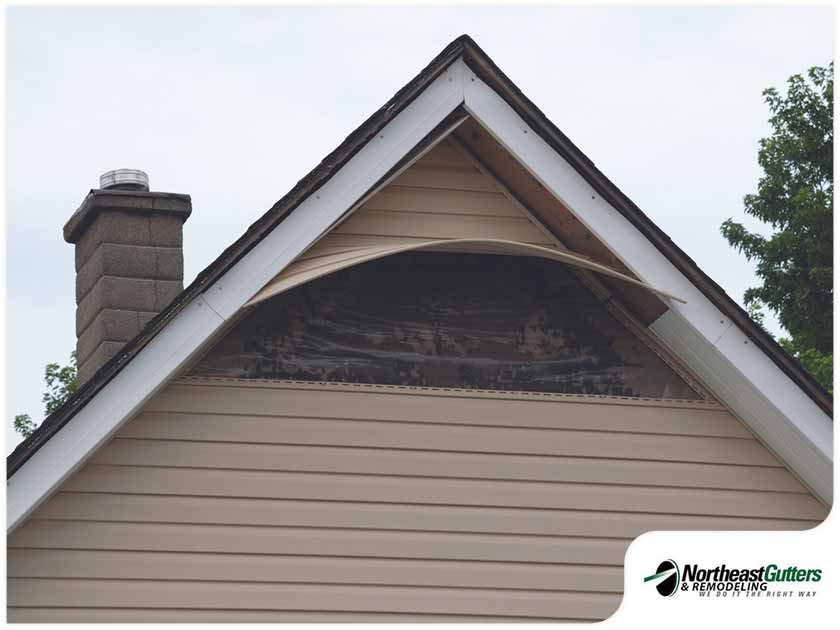
After a windstorm, a hailstorm, or a branch strike, most homeowners ask the same question: patch the damaged area or replace the siding? The answer depends on how much is damaged, what is happening behind the panels, and how old the rest of the siding is.
Northeast Gutters & Remodeling walks Bristol, Connecticut homeowners through that decision so the money goes where it protects the house.
When a Repair Makes Sense
A repair fits when the damage is limited to a few panels, the wall behind them is dry and solid, and the remaining siding is in good shape. Replacing individual vinyl panels is a common job when the profile and color are still available.
Lowe’s siding buying guide notes that vinyl needs no painting or caulking, while wood needs sealant checked at joints and fiber cement can be patched for small cracks and dents with a compatible product.
- Isolated damage: one or two panels, or a short run.
- Dry wall behind it: no soft spots, stains, or mold.
- Sound siding elsewhere: the rest of the wall is flat and tight.
- Available match: the profile and color can be sourced.
When Replacement Is the Better Value
Replacement makes more sense when damage is spread across the wall, panels are brittle or faded, or water has reached the sheathing. A fresh install also lets you correct flashing and the water resistant barrier.
| Situation | Repair or replace | Why |
|---|---|---|
| A few cracked vinyl panels | Repair | Limited area, wall intact |
| Soft wood or stains behind panels | Replace after fixing the wall | Moisture damage needs repair first |
| Damage on several walls | Replace | Patches would not match or last |
| Brittle, faded siding | Replace | Age has reached the whole wall |
| Dented trim or corner post | Repair or replace the trim | Depends on the profile |
Our siding installation and repair and vinyl clapboard siding installation crews handle both paths, and our trim, soffit, and fascia work covers the edges. For small areas, see partial siding replacement.
How Good Repairs Are Made
The Vinyl Siding Institute’s installation tips say to center fasteners in the nailing slot and leave about 1/32 inch between the head and the panel. Vinyl can expand or contract 1/2 inch or more over a 12 foot 6 inch length, so panels must move freely.
The same page recommends 1/4 inch of clearance at openings, increased to 3/8 inch below 40 degrees Fahrenheit. It also calls for flashing around openings and corners that directs water over the last full course of siding. When damage is widespread, read when to replace all your siding.
What We Review Before You Sign
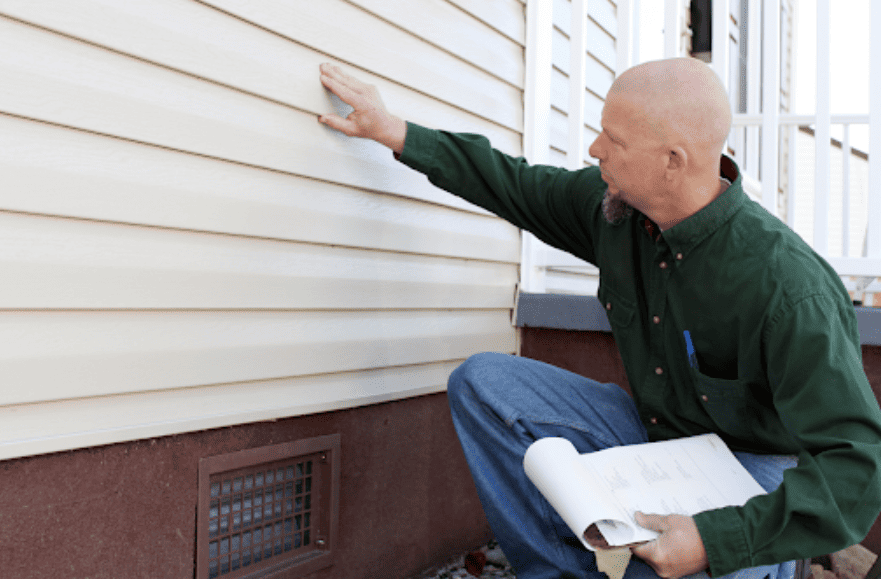
Before you sign, our crew looks at the damaged area, the sheathing behind it, the age of the remaining siding, and the trim. We write the repair or replacement plan, with photos, into a scope you can compare.
For permits, Bristol’s permit page says all permits are applied for online, and the Building Department can confirm the requirements for your project. Our post on hiring a local siding contractor explains why local knowledge helps.
Siding Repair Questions From Bristol Homeowners
How do I know if I can repair my siding instead of replacing it?
Repair usually works when the damage is limited to a few panels, the wall behind is dry and solid, and the rest of the siding is in good shape. Soft spots or stains behind the panels point to a bigger problem.
Can individual vinyl panels be replaced?
Yes, when the profile and color are still available, a few damaged panels can be swapped out. The new panels must be fastened so they can move freely, with the nail centered in the slot and not driven tight.
What does moisture behind siding mean?
Stains, soft wood, or mold behind the panels mean water has reached the sheathing. That wall needs repair before new siding goes on, and it often tips the decision toward a full replacement of that whole section.
Will repaired siding match the rest of my house?
A new panel can look different from weathered siding, since color and gloss change over time. Our crew shows samples against your wall so you can judge the match before deciding on a repair or a replacement.
Does installation in cold weather matter?
Yes, because vinyl contracts in the cold. The Vinyl Siding Institute increases the clearance at openings from 1/4 inch to 3/8 inch below 40 degrees Fahrenheit, and our crew plans the panel fit with that in mind.
Do I need a permit for siding repairs in Bristol?
The town says all permits are applied for online, and the Building Department can confirm whether a repair needs one. Ask us to note the permit steps in the written scope, so the schedule is clear from the start.
Not Sure Whether to Repair or Replace?
Northeast Gutters & Remodeling can inspect your Bristol siding, check what is behind the damage, and recommend the right fix.
Call us at 860-899-7878 or request a free estimate to get started.
About the Author
Thiago Barboza Batista is the owner of Northeast Gutters & Remodeling, a family-owned contractor in Bloomfield, Connecticut, founded as a gutter company in 2004. He oversees seamless gutter, copper gutter, roofing and siding projects for homeowners across Connecticut, from the free on-site estimate to the final inspection.
Sources
- Lowe’s: Siding Buying Guide: Maintenance and patching notes for vinyl, wood, and fiber cement.
- Vinyl Siding Institute: Installation Tips and Tricks: Fastening, expansion, cold weather clearance, and flashing.
- City of Bristol: Permits: Online permit applications.