Siding rarely fails all at once. A loose corner board, a gap at a window, or a soft spot near the foundation shows up first, and a short yearly check catches it before it becomes rot.
Northeast Gutters & Remodeling recommends a yearly walk around the house for Simsbury, Connecticut homeowners, since shaded lots near the Farmington River can stay damp longer after rain and snowmelt.
Where Water Gets In
InspectApedia’s guide to siding leak causes lists the usual entry points: gaps and open butt joints, windows and doors with poorly flashed trim, building corners, chimneys, and wall penetrations such as light fixtures, vents, and hose bibs.
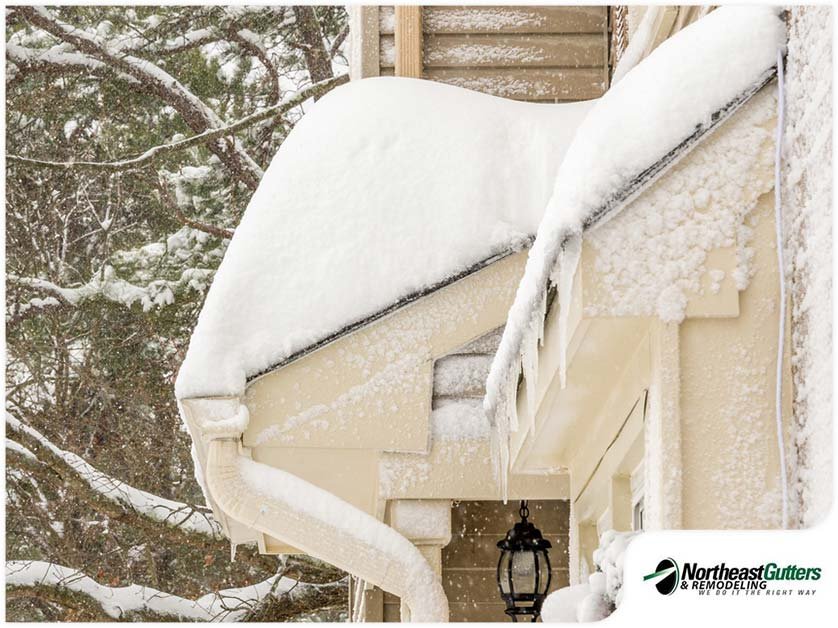
It also points out that clogged or failing gutters can spill water against the wall and cause rot in the siding and sheathing. The whole cladding system must work together, because water that gets behind the siding should run down the housewrap and exit at the bottom.
What to Check on Your Walk
- Panels: cracks, gaps, open joints, and loose or sagging pieces.
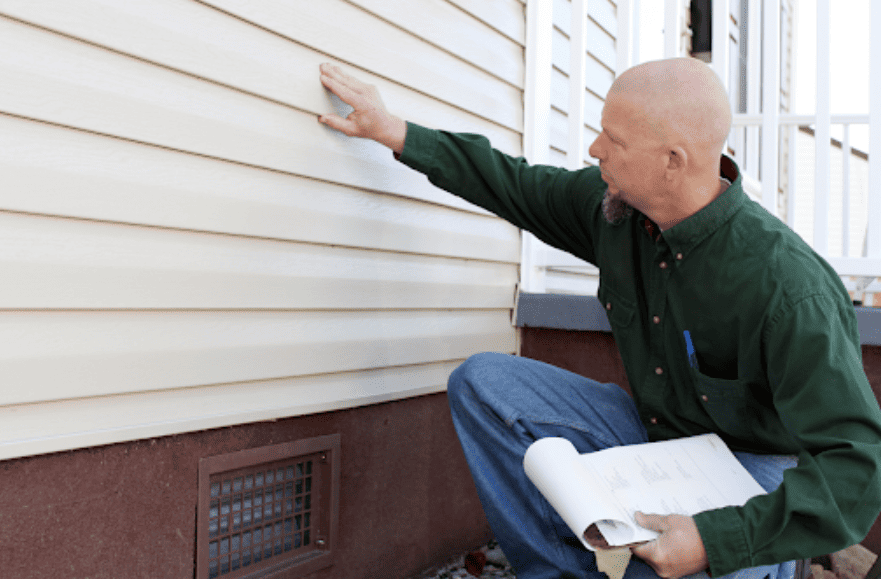
- Trim and corners: soft wood or boards that move when pressed.
- Windows and doors: sealant, flashing, and peeling paint around the openings.
- Wall penetrations: vents, fixtures, and hose bibs for gaps.
- Gutters: splash-back marks on the wall below.
The Pacific Northwest National Laboratory’s guide to window and door flashing suggests pressing a screwdriver or thumbnail into the trim, since firm wood is normal and easy penetration suggests dry rot. It also says to confirm that window weep holes are not caulked or painted over. For a seasonal care routine, see seasonal siding care.
| Warning sign | What it can mean | Next step |
|---|---|---|
| Stains below siding courses | Water moving behind the panels | Find the source above the stain |
| Soft trim or rot at openings | Failed flashing or sealant | Replace the wood, then reflash |
| Sagging or pulled away siding | Loose fasteners or damaged backing | Have it inspected up close |
| Peeling paint inside near a window | Possible leak at the opening | Check the flashing and the trim |
| Splash-back marks | Gutter overflow onto the wall | Clean and reset the gutter |
Why Yearly Checks Pay Off
Moisture that reaches the sheathing can linger unseen, and the PNNL page notes that hidden damage can cost thousands of dollars if it goes unchecked. A yearly look costs very little by comparison.
Our siding installation and repair and trim, soffit, and fascia work crews fix what a walk finds, and our custom siding solutions cover larger projects. Gutters feed the same problem, so see our post on the common causes of gutter damage.
What We Look at During a Visit
During an inspection, our crew checks each wall, the trim, the caulk and flashing at openings, and the gutter line above. We take notes and photos, and we put the repairs we recommend into a written scope you can keep for next year’s comparison.
If a repair grows into a larger project, the Simsbury Building Department can tell you whether a permit applies, and we can add that step to the scope.
Siding Inspection Questions From Simsbury Homeowners
How often should siding be inspected?
A yearly walk around the house is a sensible rhythm, with an extra look after a major storm. A few minutes with a camera each time makes it easy to see changes from one year to the next.
What are the first signs of siding trouble?
Cracked or loose panels, soft trim, stains below siding courses, and peeling paint near windows are common early signs of trouble. Catching them early usually means a small repair rather than a large replacement later on.
Can I inspect my siding myself?
Yes, a walk around with a flashlight, a screwdriver for testing trim, and a camera covers most of the visible clues. Our crew then checks the areas that need a ladder and the hidden layers behind the panels.
Where does water usually get behind siding?
Common entry points include gaps and open joints, poorly flashed windows and doors, building corners, chimneys, and wall penetrations like vents, light fixtures, and hose bibs. Clogged gutters can also spill water against the wall below them.
Why do weep holes matter on windows?
Weep holes let moisture escape if it gets behind the glass, so they should not be caulked or painted over. We check them during an inspection and clear them when they are blocked, then note it in the scope.
Do I need a permit for siding repairs in Simsbury?
Small repairs often do not need one, but the Simsbury Building Department can confirm that for your project. If a repair becomes a larger siding replacement, we add the permit step to the written scope for you.
Schedule Your Siding Inspection
Northeast Gutters & Remodeling can walk your Simsbury home, test the trim, and report what we find with photos.
Call us at 860-899-7878 or request a free estimate to book a visit.
About the Author
Thiago Barboza Batista is the owner of Northeast Gutters & Remodeling, a family-owned contractor in Bloomfield, Connecticut, founded as a gutter company in 2004. He oversees seamless gutter, copper gutter, roofing and siding projects for homeowners across Connecticut, from the free on-site estimate to the final inspection.
Sources
- InspectApedia: Siding Leak Causes: Entry points for water, signs of moisture damage, and inspection tips.
- PNNL Building America Solution Center: Look for Missing Window and Door Flashing: Trim tests, weep holes, and signs of flashing problems.