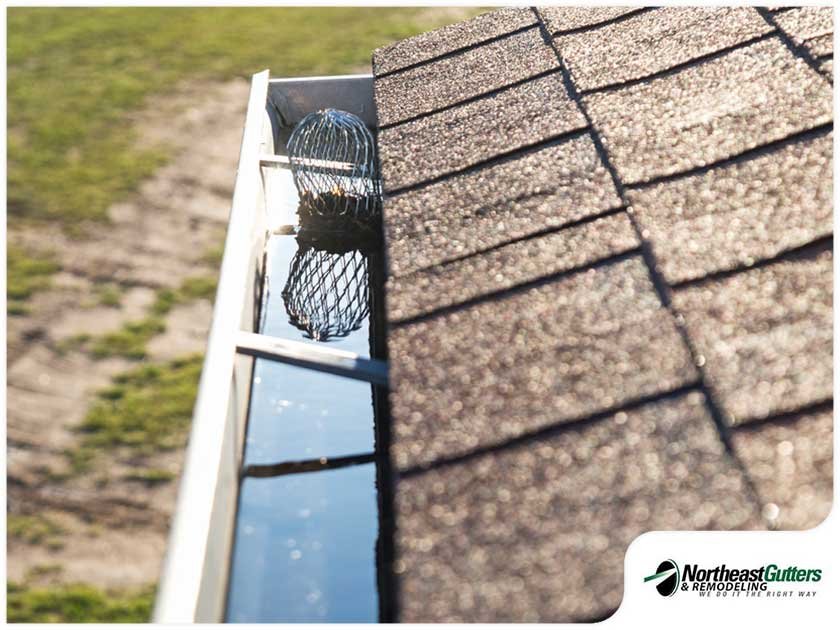
A gutter that still holds water after the rain stops has a drainage problem. The cause is usually a clog, a low spot, or a sagging section, and each one can be found with a simple check.
Northeast Gutters & Remodeling, a family-owned contractor in Bloomfield, CT, repairs gutters that hold water for homeowners in East Hartford, Connecticut, and nearby towns. The steps below help you find the cause and decide what to fix first.
Start With a Hose Test
Run a garden hose into the far end of the gutter and watch where the water collects, pauses, or spills over. That spot shows where the system fails.
Mark each low spot with chalk so you can compare it after repairs. A written record helps a contractor work faster.
Check for Hidden Clogs
Debris often sits inside the downspout instead of the trough. The General Services Administration’s guide to gutter and downspout maintenance says to clean gutters at least twice a year, and more often near large trees.
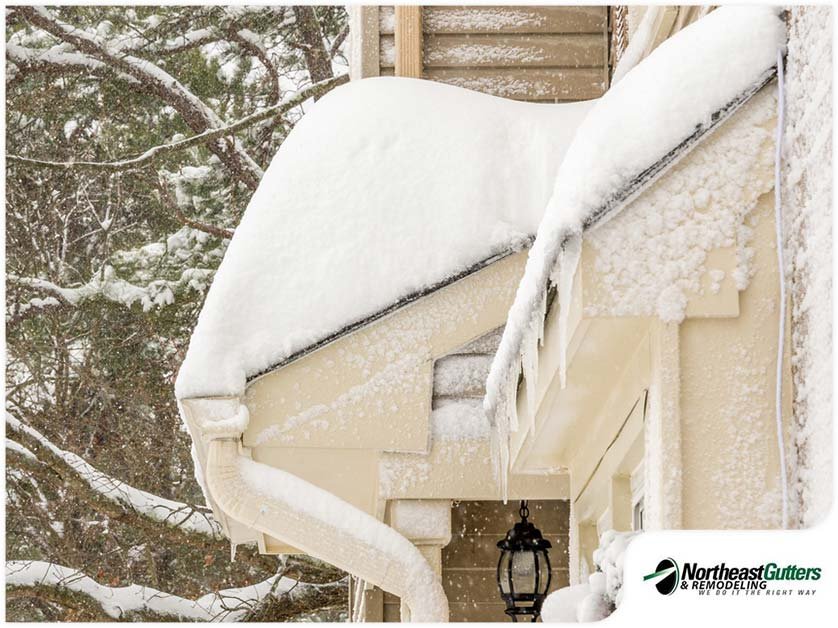
It adds that clogs can cause overflow and ice buildup, so check during leaf fall and again in winter. Our gutter cleaning and maintenance programs keep the outlets open. For what standing water damages, see standing water risks.
Look at the Slope
This Old House says gutters should drop at least a quarter inch for each ten feet, sloping toward the downspouts. Its guide to fixing sagging gutters suggests checking with a level or watching where water pools.
Leaves and twigs add weight, and weak fasteners, too few hangers, or ice dams can pull a run out of pitch. A sagging section holds water until the hangers are corrected.
| Cause | What you see | Typical fix |
|---|---|---|
| Clog | Water backs up above the downspout | Clear the outlet and flush the downspout |
| Low spot | Water pools in one section | Re-hang the run to restore slope |
| Loose hangers | Gutter sags between fasteners | Replace or add hangers |
| Rotted fascia | Fasteners pull out of soft wood | Repair the board before re-hanging |
Inspect Hangers and Fascia
The GSA guide says to look for loose, broken, or misaligned hangers, pulled fasteners, split sections, and corrosion around nails. This Old House recommends hanger spacing of about 16 inches, or matching the rafter spacing.
If the fascia is soft, replace the bad sections before reattaching the gutter. Our gutter repairs crew handles pitch, fasteners, and leaks together.
When Repair Is Not Enough
A run that has sagged repeatedly may need new hardware or new sections. Our aluminum seamless gutter installation replaces worn runs with fewer joints to leak.
If water pools in one area, This Old House suggests adding a downspout and extending it away from the foundation. Our underground drainage installation carries the water farther from the house, and our blog on common causes of gutter damage explains what to watch for.
Quick Fix Checklist
- Run a hose and mark the low spots.
- Clear the downspout and flush it.
- Check the slope with a level.
- Tighten or replace loose hangers.
- Inspect the fascia for soft wood.
- Call a pro for severe sags.
What Our Crew Looks At on Site
On an estimate, our crew looks at the pitch, the hangers, the outlets, and the fascia behind the run. We write the findings into a scope with photos so you can see where the water is held back.
Standing Water in Gutters FAQs
How much slope should a gutter have?
This Old House says gutters should drop at least one quarter inch for each ten feet, sloping toward the downspouts. Check with a level or watch where water pools after you run a hose through the gutter.
How often should gutters be cleaned?
The General Services Administration says to clean gutters at least twice a year, and more often near large trees. It also suggests checking during leaf fall and in winter, because clogs can cause overflow and ice buildup.
How far apart should gutter hangers be?
This Old House cites a hanger spacing of about 16 inches, or matching the rafter spacing, and warns that spacing near 30 inches cannot support water filled gutters. Add hangers to problem areas before the next storm.
Why does my gutter hold water at one spot?
A low spot usually means a sag from weak fasteners, too few hangers, or poor slope, and leaves or twigs add weight that makes it worse. Clear the debris first, then check the hangers at that section.
Can a clogged downspout cause standing water?
Yes, debris often sits inside the downspout instead of the trough, so water backs up above it in the gutter. Clear the outlet and flush the downspout, and keep the strainer in place so debris stays out.
When should I call a professional?
This Old House recommends hiring a professional for severe damage or if you are uncomfortable on a ladder. A pro can also repair rotted fascia, which is a common reason fasteners keep pulling out of the board.
Gutters Still Holding Water?
Northeast Gutters & Remodeling can find the cause and repair it so water moves to the downspouts.
Send a note through our free estimate page or ring 860-899-7878 to book a gutter check.
About the Author
Thiago Barboza Batista is the owner of Northeast Gutters & Remodeling, a family-owned contractor in Bloomfield, Connecticut, founded as a gutter company in 2004. He oversees seamless gutter, copper gutter, roofing and siding projects for homeowners across Connecticut, from the free on-site estimate to the final inspection.
Sources
- GSA: General Inspection and Maintenance of Gutters and Downspouts: Inspection and cleaning schedule.
- This Old House: How To Fix Sagging Gutters: Slope, hangers, and fixes.