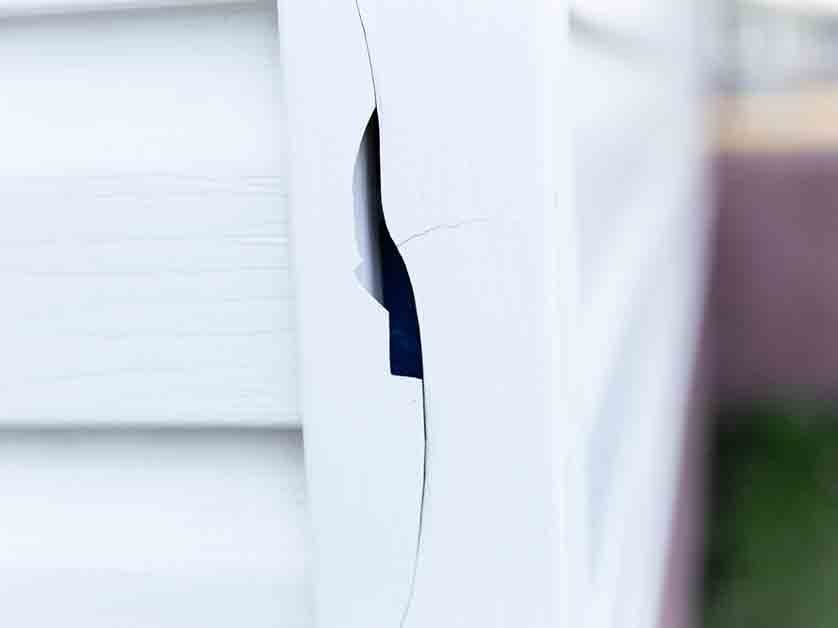
Siding problems often look like separate issues, but most come from a small number of causes. Cracks, warping, streaks, loose panels, and moisture each point to a different source, and knowing the source helps you choose the right repair instead of covering up the symptom.
Northeast Gutters & Remodeling inspects siding for Bloomfield, Connecticut homeowners and traces each problem to its origin before recommending work.
1. Cracking Panels
Cracks often come from impact, temperature swings, or fasteners driven too tight. A crack that starts at a nail hole usually points to installation, while a crack in an open area may come from a hard hit.
Industry installation tips recommend driving fasteners straight and leaving a small gap under the head, about the thickness of a dime, rather than pinning the panel tight. They also advise corrosion resistant fasteners and spacing of no more than 16 inches for horizontal panels.
2. Warped or Buckled Panels
Warping can follow heat exposure, poor airflow behind the siding, or nails that restrict the movement of vinyl. The same page warns against face nailing, with one nail at the top of a gable as the exception, because panels need room to slide.
3. Streaks and Stains
Dark streaks often come from mildew, algae, or runoff from gutters. A big box retailer’s siding buying guide says vinyl can be cleaned with a garden hose and mild detergent, and that some manufacturers prohibit pressure washing.
If pressure washing is allowed, the guide suggests 1500 to 2400 PSI with a 40 degree tip, kept at least 12 inches away.
4. Loose or Sagging Panels
Panels pull loose when fasteners back out, the wall behind them moves, or wind gets under an open edge. InspectApedia lists improper nailing and storm damage among the ways a wall can be left open.
5. Moisture Behind the Wall
InspectApedia’s guide to siding leak causes points to gaps, windows and doors with poorly flashed trim, corners, chimneys, and penetrations. Signs include stains below siding courses, rot at openings, and soft sheathing.
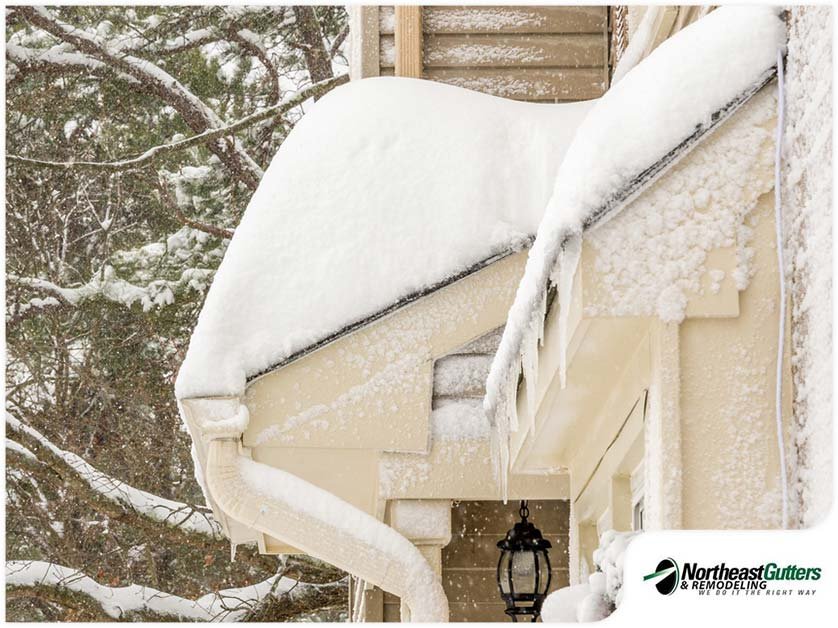
It adds that clogged gutters can spill water against the wall, which is why our gutter cleaning and maintenance programs protect siding too.
| Problem | Common cause | Treat the source |
|---|---|---|
| Cracking | Impact, tight fasteners | Replace the panel, fasten with clearance |
| Warping | Heat, nails that restrict movement | Refasten and allow expansion |
| Streaks | Mildew, algae, gutter runoff | Clean gently and fix the overflow |
| Loose panels | Backed out fasteners, wind | Refasten or replace the panel |
| Moisture behind | Failed flashing or sealant | Repair the leak, then the wall |
Our siding installation and repair and custom siding solutions crews fix the source, and our trim, soffit, and fascia work handles the edges. Read more in our post about why a local siding contractor helps. For a walkaround checklist, read where siding damage starts.
What Happens at an Inspection
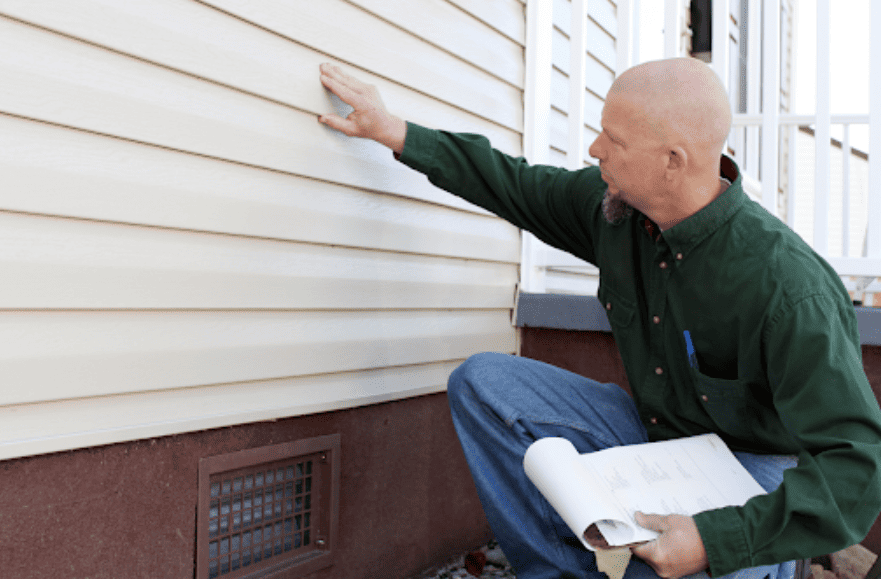
During an inspection, our crew examines panels, fasteners, trim, flashing, and the wall behind damaged areas. The cause and the repair then go into a written scope for your review before work starts.
Siding Problem Questions From Bloomfield Homeowners
Why do vinyl siding panels crack?
Cracks come from impact, temperature swings, or fasteners driven too tight. A crack that starts at a nail hole often points to installation, so a repair should refasten the panel with room for it to move.
Why is my siding buckling or warping?
Heat, poor airflow, or nails that restrict the movement of vinyl can cause it. The VSI warns against face nailing because vinyl expands and contracts with temperature, so fasteners must allow free movement of each panel.
Can I pressure wash my siding?
Some manufacturers prohibit it, so check first. Lowe’s suggests 1500 to 2400 PSI, a 40 degree tip, and 12 inches of distance for vinyl, though a garden hose and mild detergent are a gentler first step.
What does moisture behind siding look like?
Stains running down siding courses, rot around windows and doors, soft sheathing, and panels that move are typical signs. A proper repair should find and fix the leak source before the wall is closed up again for good.
Can clogged gutters hurt siding?
Yes, clogged or failing gutters can spill water against the wall and cause rot in the siding and sheathing. Keeping the channels clear and the pitch correct protects the wall that sits below them all year.
Should I repair or replace damaged panels?
A few damaged panels over a dry, solid wall can often be repaired. Widespread cracking, warping, or moisture damage points toward replacement, and our crew explains both options in the written scope for you to compare.
Seeing a Siding Problem?
Our team at Northeast Gutters & Remodeling can inspect your Bloomfield siding and trace the problem to its cause.
Phone 860-899-7878 or ask for a free estimate and we will set a visit.
About the Author
Thiago Barboza Batista is the owner of Northeast Gutters & Remodeling, a family-owned contractor in Bloomfield, Connecticut, founded as a gutter company in 2004. He oversees seamless gutter, copper gutter, roofing and siding projects for homeowners across Connecticut, from the free on-site estimate to the final inspection.
Sources
- VSI: Installation Tips and Tricks: Fastening, expansion, and clearance.
- Lowe’s: Siding Buying Guide: Cleaning vinyl siding and pressure washing limits.
- InspectApedia: Siding Leak Causes: Entry points for water and signs of moisture damage.